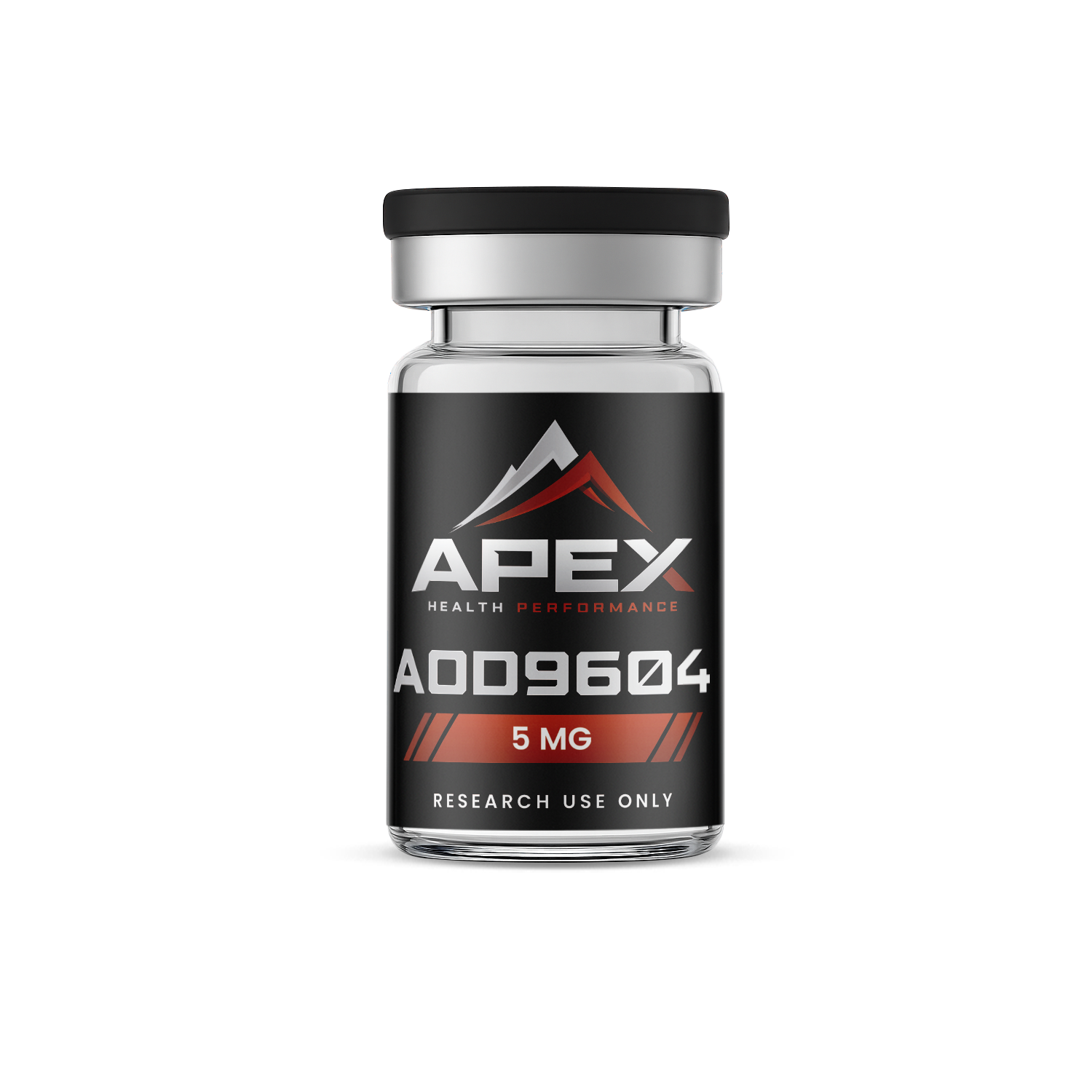
AOD 9604 (5mg)
$120.00
3 published certificates
Certificate information is temporarily unavailable.
Description
A single-component research material supplied for controlled research environments. Suitable for studies involving peptide characterization and method development in model systems.Not for human use.
Documentation & Quality Assurance
Each lot is sourced through our verified global supply chain with emphasis on traceability and quality control.These documents are reviewed internally and displayed as they become available.
Important Notice
This product is intended for laboratory research use only. It is not intended for human or veterinary use, and must not be used for diagnostic, therapeutic, or clinical purposes.
This material is not a drug, medical device, or dietary supplement, and has not been evaluated by the U.S. Food and Drug Administration.
Quality & Manufacturing
We work directly with the manufacturers. Each supplier is reviewed for reliability, documentation integrity, and transparency in testing.
Our minimum purity standard is 98%. Every batch we ship has its own certificate of analysis, and every certificate confirms identity, purity and net content. Where available, endotoxin testing results are included on Certificates of Analysis to verify laboratory purity; their inclusion is for research quality assessment only and does not imply suitability for human or veterinary use.
All research materials are sealed for integrity and packaged for stability during storage and transport from manufacturing through final delivery.
Additional information
| Weight | 0.0625 lbs |
|---|
Certificate of Analysis
Every batch undergoes independent third-party laboratory analysis to verify identity, potency, and safety. Testing includes quantitative assay verification, heavy metals screening, and comprehensive microbial analysis.
View Certificate of AnalysisStorage Instructions
All products from Apex Health Performance are manufactured using a lyophilization (freeze-drying) process. This method is designed to maintain product integrity and allows vials to remain stable during shipping for approximately 3–4 months.
Once a vial is reconstituted with bacteriostatic water, it should be stored in the refrigerator to help maintain stability. Under these conditions, reconstituted material is generally considered stable for up to 30 days.
Lyophilization is a dehydration technique in which compounds are frozen and then exposed to low pressure. This causes the water in the vial to sublimate directly from solid to gas, leaving behind a stable, crystalline white structure. This powder can be kept at room temperature until reconstitution.
Upon receipt, products should be stored away from heat and light. For short-term use, refrigeration at approximately 4°C (39°F) is suitable. For long-term storage (several months to years), vials may be placed in a freezer at approximately -80°C (-112°F). Freezing is the preferred method for preserving product stability over extended periods.
⚠️ Important Notice:
These products are intended for research use only. Not for human consumption.
Related products
-
-
-
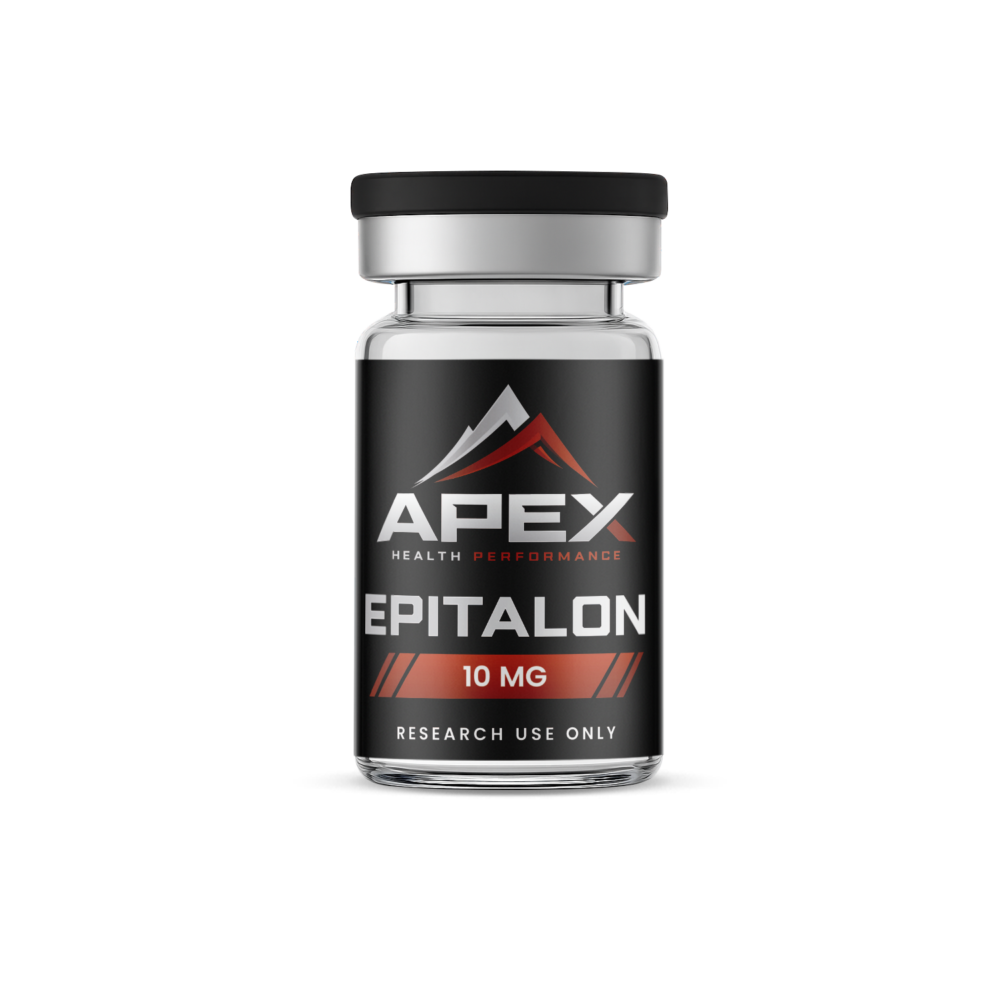
Epitalon
Price range: $100.00 through $150.00Select options This product has multiple variants. The options may be chosen on the product page
Research Use Only
The following peer-reviewed publications reference compounds for laboratory and in vitro research purposes only. Not for human or animal use. Not intended to diagnose, treat, cure, or prevent any disease or condition.
Published Scientific Research
Peer-reviewed laboratory studies investigating peptide fragments
Hemorphins-From Discovery to Functions and Pharmacology.
During the last three decades, a variety of different studies on bioactive peptides that are opioid receptor ligands, have been carried out, with regard to their isolation and identification, as well as their molecular functions in living organisms.
View Full Study on PubMedPLGA/PLA-Based Long-Acting Injectable Depot Microspheres in Clinical Use: Production and Characterization Overview for Protein/Peptide Delivery.
Besides, the encapsulated proteins/peptides are susceptible to harsh processing conditions associated with microsphere fabrication methods, including exposure to organic solvent, shear stress, and temperature fluctuations.
View Full Study on PubMedElastin in the Tumor Microenvironment.
Elastic fibers are found in the extracellular matrix (ECM) of tissues requiring resilience and depend on elasticity. Elastin and its degradation products have multiple roles in the oncologic process. In many malignancies, the remodeled ECM expresses high levels of the elastin protein which may have either positive or negative effects on tumor growth. Elastin cross-linking with other ECM components and the enzymes governing this process all have effects on tumorigenesis. Elastases, and specifical
View Full Study on PubMedThe multifaceted roles of the matrikine Pro-Gly-Pro in pulmonary health and disease.
In this article, we describe our current understanding of the pathways that generate, degrade and modify PGP to dictate its bioavailability and stability. Accordingly, we discuss how this pathway is subverted in chronic lung diseases giving rise to persistent inflammation and pathological tissue remodelling.
View Full Study on PubMedHuman sports drug testing by mass spectrometry.
Since the installation of anti-doping rules and regulations and their international enforcement in the mid-1960s, mass spectrometry has been an integral part of doping control procedures. Although its utility was limited in the first decade, instrumental improvements and method optimizations have made mass spectrometry, in all its facets, an indispensable tool in modern sports drug testing. In this review, milestones in doping control analysis accomplished in Germany and reaching from the early
View Full Study on PubMedSimplifying and expanding the screening for peptides <2 kDa by direct urine injection, liquid chromatography, and ion mobility mass spectrometry.
The analysis of low-molecular-mass peptides in doping controls has become a mandatory aspect in sports drug testing and, thus, the number of samples that has to be tested for these analytes has been steadily increasing. Several peptides <2 kDa with performance-enhancing properties are covered by the list of prohibited substances of the World Anti-Doping Agency including Desmopressin, LH-RH, Buserelin, Triptorelin, Leuprolide, GHRP-1, GHRP-2, GHRP-3, GHRP-4, GHRP-5,GHRP-6, Alexamorelin, Ipamoreli
View Full Study on PubMedResearch Use Only
The following peer-reviewed publications reference compounds for laboratory and in vitro research purposes only. Not for human or animal use. Not intended to diagnose, treat, cure, or prevent any disease or condition.
Published Scientific Research
Peer-reviewed laboratory studies investigating peptide fragments
Human sports drug testing by mass spectrometry.
Since the installation of anti-doping rules and regulations and their international enforcement in the mid-1960s, mass spectrometry has been an integral part of doping control procedures. Although its utility was limited in the first decade, instrumental improvements and method optimizations have made mass spectrometry, in all its facets, an indispensable tool in modern sports drug testing. In this review, milestones in doping control analysis accomplished in Germany and reaching from the early
View Full Study on PubMedSimplifying and expanding the screening for peptides <2 kDa by direct urine injection, liquid chromatography, and ion mobility mass spectrometry.
The analysis of low-molecular-mass peptides in doping controls has become a mandatory aspect in sports drug testing and, thus, the number of samples that has to be tested for these analytes has been steadily increasing. Several peptides <2 kDa with performance-enhancing properties are covered by the list of prohibited substances of the World Anti-Doping Agency including Desmopressin, LH-RH, Buserelin, Triptorelin, Leuprolide, GHRP-1, GHRP-2, GHRP-3, GHRP-4, GHRP-5,GHRP-6, Alexamorelin, Ipamoreli
View Full Study on PubMedDetection and in vitro metabolism of AOD9604.
AOD9604 is a peptide consisting of the C-terminal fragment of human growth hormone from amino acids 177-191 with an additional tyrosine residue at the N-terminus of the peptide. It is reported to mimic the lipolytic properties of growth hormone without the diabetogenic side effects. Therefore, AOD9604 may be used as a performance enhancing drug and is banned by the World Anti-doping Agency (WADA). The peptide is available on several Internet websites and was recently identified in confiscated vi
View Full Study on PubMedAnalytical approaches for the detection of emerging therapeutics and non-approved drugs in human doping controls.
modified insulin-like growth factor-1, TB-500, hematide/peginesatide, growth hormone releasing peptides, AOD-9604, etc.) and non-peptidic (selective androgen receptor modulators, hypoxia-inducible factor stabilizers, siRNA, S-107 and ARM036/aladorian, etc.) as well as inorganic (cobalt) nature are considered and discussed in terms of specific requirements originating from physicochemical properties, concentration levels, metabolism, and their amenability for chromatographic-mass spectrometric or alternative detection methods.
View Full Study on PubMedDetecting peptidic drugs, drug candidates and analogs in sports doping: current status and future directions.
With the growing availability of mature systems and strategies in biotechnology and the continuously expanding knowledge of cellular processes and involved biomolecules, human sports drug testing has become a considerably complex field in the arena of analytical chemistry. Proving the exogenous origin of peptidic drugs and respective analogs at lowest concentration levels in biological specimens (commonly blood, serum and urine) of rather limited volume is required to pursue an action against ch
View Full Study on PubMedResearch Use Only
The following peer-reviewed publications reference compounds for laboratory and in vitro research purposes only. Not for human or animal use. Not intended to diagnose, treat, cure, or prevent any disease or condition.
Published Scientific Research
Peer-reviewed laboratory studies investigating peptide fragments
Hemorphins-From Discovery to Functions and Pharmacology.
During the last three decades, a variety of different studies on bioactive peptides that are opioid receptor ligands, have been carried out, with regard to their isolation and identification, as well as their molecular functions in living organisms.
View Full Study on PubMed →PLGA/PLA-Based Long-Acting Injectable Depot Microspheres in Clinical Use: Production and Characterization Overview for Protein/Peptide Delivery.
Besides, the encapsulated proteins/peptides are susceptible to harsh processing conditions associated with microsphere fabrication methods, including exposure to organic solvent, shear stress, and temperature fluctuations.
View Full Study on PubMed →Elastin in the Tumor Microenvironment.
Elastic fibers are found in the extracellular matrix (ECM) of tissues requiring resilience and depend on elasticity. Elastin and its degradation products have multiple roles in the oncologic process. In many malignancies, the remodeled ECM expresses high levels of the elastin protein which may have either positive or negative effects on tumor growth. Elastin cross-linking with other ECM components and the enzymes governing this process all have effects on tumorigenesis. Elastases, and specifical
View Full Study on PubMed →The multifaceted roles of the matrikine Pro-Gly-Pro in pulmonary health and disease.
In this article, we describe our current understanding of the pathways that generate, degrade and modify PGP to dictate its bioavailability and stability. Accordingly, we discuss how this pathway is subverted in chronic lung diseases giving rise to persistent inflammation and pathological tissue remodelling.
View Full Study on PubMed →Human sports drug testing by mass spectrometry.
Since the installation of anti-doping rules and regulations and their international enforcement in the mid-1960s, mass spectrometry has been an integral part of doping control procedures. Although its utility was limited in the first decade, instrumental improvements and method optimizations have made mass spectrometry, in all its facets, an indispensable tool in modern sports drug testing. In this review, milestones in doping control analysis accomplished in Germany and reaching from the early
View Full Study on PubMed →Simplifying and expanding the screening for peptides <2 kDa by direct urine injection, liquid chromatography, and ion mobility mass spectrometry.
The analysis of low-molecular-mass peptides in doping controls has become a mandatory aspect in sports drug testing and, thus, the number of samples that has to be tested for these analytes has been steadily increasing. Several peptides <2 kDa with performance-enhancing properties are covered by the list of prohibited substances of the World Anti-Doping Agency including Desmopressin, LH-RH, Buserelin, Triptorelin, Leuprolide, GHRP-1, GHRP-2, GHRP-3, GHRP-4, GHRP-5,GHRP-6, Alexamorelin, Ipamoreli
View Full Study on PubMed →Important Research Notice: These products are research chemicals intended exclusively for in vitro laboratory research by qualified professionals. Not for human or animal consumption. Not approved by the FDA for any therapeutic purpose. Sold strictly for scientific research applications only.