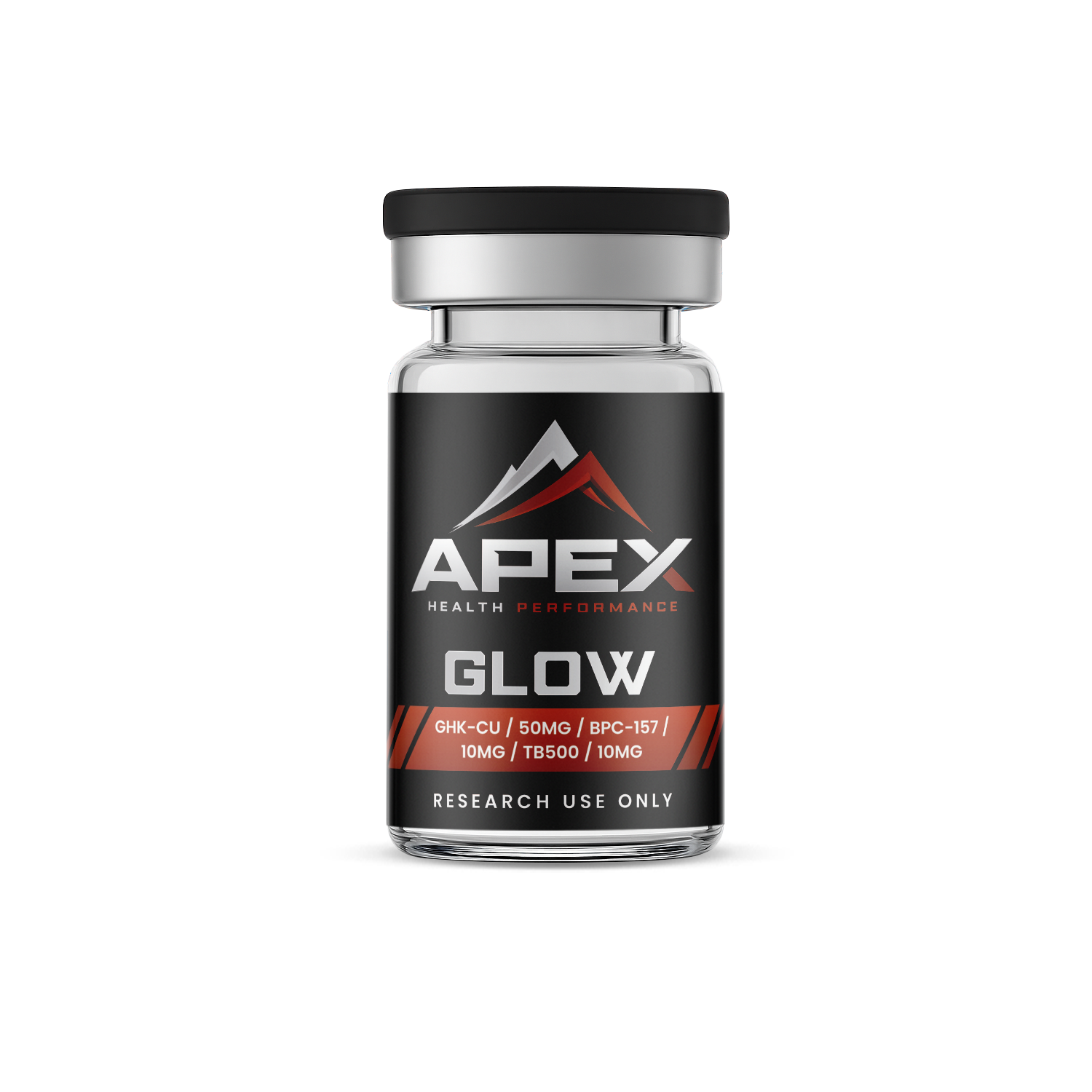
GLOW GHK-Cu (50mg) / BPC-157 (10mg) / TB500 (10mg)
$165.00
3 published certificates
Certificate information is temporarily unavailable.
Description
A three-component co-formulation supplied for controlled research environments. Suitable for studies involving peptide characterization and method development in model systems.Not for human use.
Documentation & Quality Assurance
Each lot is sourced through our verified global supply chain with emphasis on traceability and quality control.These documents are reviewed internally and displayed as they become available.
Important Notice
This product is intended for laboratory research use only. It is not intended for human or veterinary use, and must not be used for diagnostic, therapeutic, or clinical purposes.
This material is not a drug, medical device, or dietary supplement, and has not been evaluated by the U.S. Food and Drug Administration.
Quality & Manufacturing
We work directly with the manufacturers. Each supplier is reviewed for reliability, documentation integrity, and transparency in testing.
Our minimum purity standard is 98%. Every batch we ship has its own certificate of analysis, and every certificate confirms identity, purity and net content. Where available, endotoxin testing results are included on Certificates of Analysis to verify laboratory purity; their inclusion is for research quality assessment only and does not imply suitability for human or veterinary use.
All research materials are sealed for integrity and packaged for stability during storage and transport from manufacturing through final delivery.
Additional information
| Weight | 0.0625 lbs |
|---|
Published Scientific Research
Explore the full library of peer-reviewed studies, clinical data, mechanism breakdowns, and molecular specifications for GLOW GHK-Cu (50mg) / BPC-157 (10mg) / TB500 (10mg).
All research is sourced from PubMed-indexed journals for informational and educational purposes only. For Research Use Only (RUO). Not for human use.
View Full Research Library →Certificate of Analysis
Every batch undergoes independent third-party laboratory analysis to verify identity, potency, and safety. Testing includes quantitative assay verification, heavy metals screening, and comprehensive microbial analysis.
View Certificate of AnalysisStorage Instructions
All products from Apex Health Performance are manufactured using a lyophilization (freeze-drying) process. This method is designed to maintain product integrity and allows vials to remain stable during shipping for approximately 3–4 months.
Once a vial is reconstituted with bacteriostatic water, it should be stored in the refrigerator to help maintain stability. Under these conditions, reconstituted material is generally considered stable for up to 30 days.
Lyophilization is a dehydration technique in which compounds are frozen and then exposed to low pressure. This causes the water in the vial to sublimate directly from solid to gas, leaving behind a stable, crystalline white structure. This powder can be kept at room temperature until reconstitution.
Upon receipt, products should be stored away from heat and light. For short-term use, refrigeration at approximately 4°C (39°F) is suitable. For long-term storage (several months to years), vials may be placed in a freezer at approximately -80°C (-112°F). Freezing is the preferred method for preserving product stability over extended periods.
⚠️ Important Notice:
These products are intended for research use only. Not for human consumption.
Related products
-
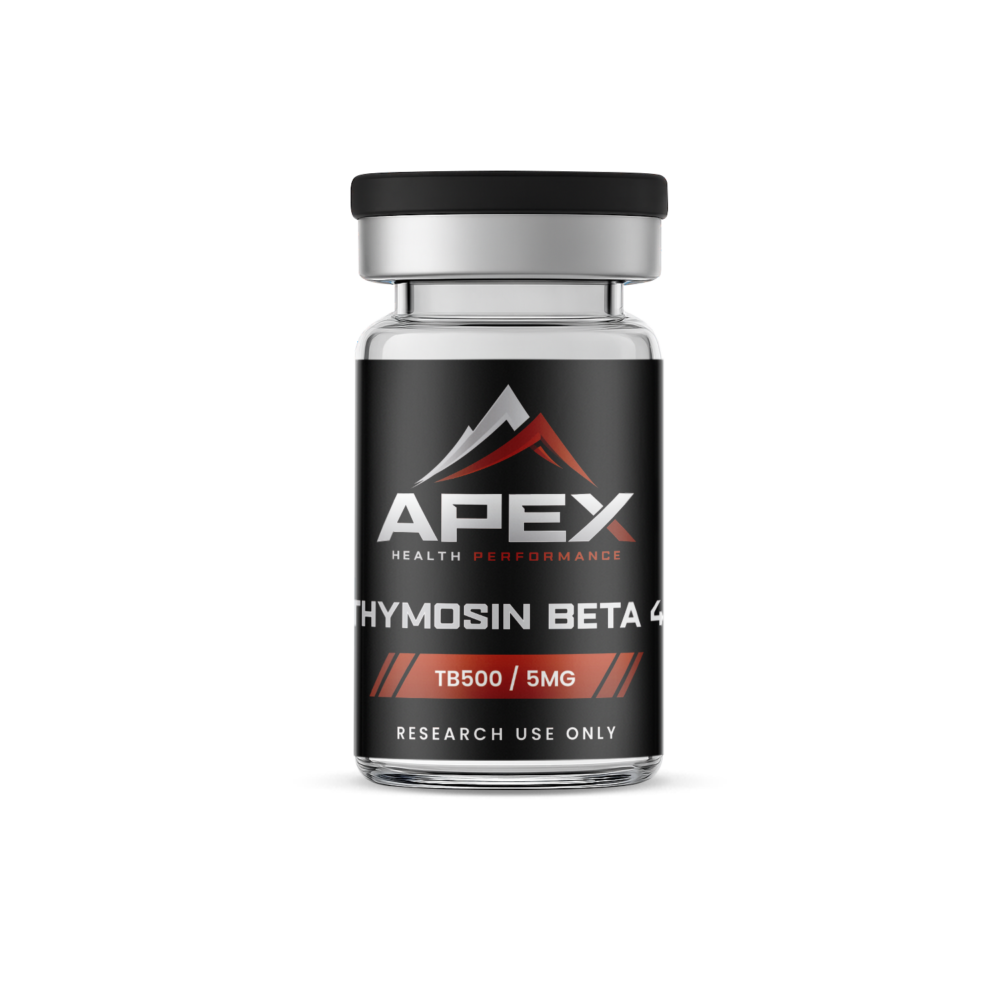
Thymosin Beta 4 (TB500)
Price range: $75.00 through $140.00Select options This product has multiple variants. The options may be chosen on the product page -
-
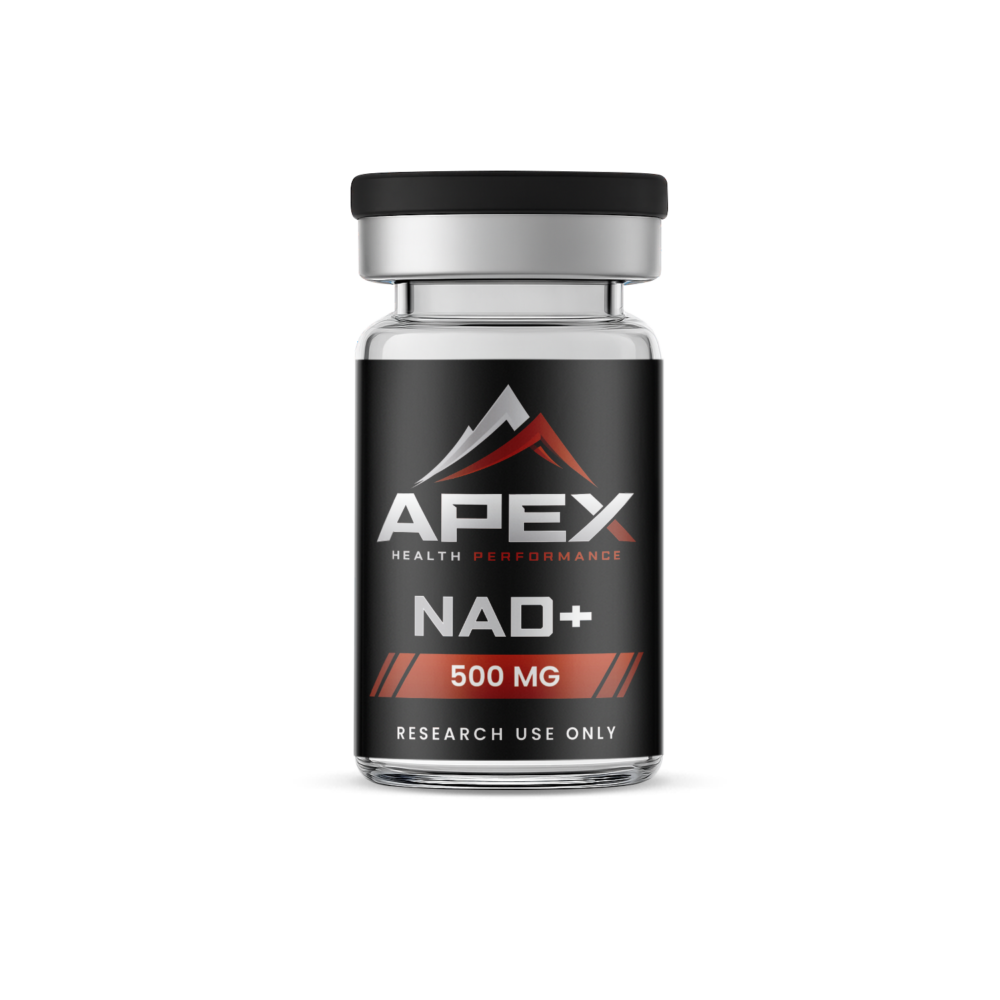
NAD+
Price range: $100.00 through $180.00Select options This product has multiple variants. The options may be chosen on the product page
Research Use Only
The following peer-reviewed publications reference compounds for laboratory and in vitro research purposes only. Not for human or animal use. Not intended to diagnose, treat, cure, or prevent any disease or condition.
Published Scientific Research
Peer-reviewed laboratory studies investigating regenerative peptides
Enzyme-Programmable DNA-PEG Hydrogel Spatiotemporally Regulates Bone Regeneration Microenvironment.
Conventional hydrogel drug delivery systems are limited in recapitulating the natural spatiotemporal progression of bone regeneration due to their passive release mechanisms. Molecular dynamics simulations reveal the underlying mechanism of hydrogel-mediated mineralization, demonstrating enhanced calcium phosphate formation.
View Full Study on PubMedInjectable Peptide Therapy: A Primer for Orthopaedic and Sports Medicine Physicians.
RESULTS: BPC-157 demonstrated potential benefits in tendon and muscle repair, but these findings are largely unvalidated in human trials. CJC-1295 combined with ipamorelin showed significantly improved maximum tetanic tension in murine models with glucocorticoid-induced muscle loss, but these findings are limited to animal studies.
View Full Study on PubMedAI-Guided Design of Antimicrobial Peptide Hydrogels for Precise Treatment of Drug-resistant Bacterial Infections.
Traditional biomaterial development lacks systematicity and predictability, posing significant challenges in addressing the intricate engineering issues related to infections with drug-resistant bacteria. The unprecedented ability of artificial intelligence (AI) to manage complex systems offers a novel paradigm for materials development. However, no AI model currently guides the development of antibacterial biomaterials based on an in-depth understanding of the interplay between biomaterials and
View Full Study on PubMedBrain-infiltrating ILC2s boost poststroke angiogenic initiation through α-CGRP production.
Whether ILC2s can infiltrate the brain from bloodstream and the underlying mechanisms involved remain unclear. Impaired function of CGRP receptors on cerebrovascular endothelial cells abolishes the angiogenic effect of ILC2s.
View Full Study on PubMedMY-1 promotes angiogenesis in the ischemic hindlimbs by regulating the stability of CDC42 via PSMD14.
This system significantly promoted blood flow reperfusion and muscle tissue repair in the ischemic region. In vitro experiments revealed that MY-1 promoted the formation of filopodia in endothelial cells, accelerating cell migration and confirming the critical role of CDC42 in this process.
View Full Study on PubMedDual Factor-Loaded Artificial Periosteum Accelerates Bone Regeneration.
In the clinic, inactivation of osteosarcoma using microwave ablation would damage the periosteum, resulting in frequent postoperative complications. The prepared artificial periosteum showed a sustained release of SDF-1α and CGRP after 14 days of immersion.
View Full Study on PubMedResearch Use Only
The following peer-reviewed publications reference compounds for laboratory and in vitro research purposes only. Not for human or animal use. Not intended to diagnose, treat, cure, or prevent any disease or condition.
Published Scientific Research
Peer-reviewed laboratory studies investigating regenerative peptides
Enzyme-Programmable DNA-PEG Hydrogel Spatiotemporally Regulates Bone Regeneration Microenvironment.
Conventional hydrogel drug delivery systems are limited in recapitulating the natural spatiotemporal progression of bone regeneration due to their passive release mechanisms. Molecular dynamics simulations reveal the underlying mechanism of hydrogel-mediated mineralization, demonstrating enhanced calcium phosphate formation.
View Full Study on PubMedInjectable Peptide Therapy: A Primer for Orthopaedic and Sports Medicine Physicians.
RESULTS: BPC-157 demonstrated potential benefits in tendon and muscle repair, but these findings are largely unvalidated in human trials. CJC-1295 combined with ipamorelin showed significantly improved maximum tetanic tension in murine models with glucocorticoid-induced muscle loss, but these findings are limited to animal studies.
View Full Study on PubMedAI-Guided Design of Antimicrobial Peptide Hydrogels for Precise Treatment of Drug-resistant Bacterial Infections.
Traditional biomaterial development lacks systematicity and predictability, posing significant challenges in addressing the intricate engineering issues related to infections with drug-resistant bacteria. The unprecedented ability of artificial intelligence (AI) to manage complex systems offers a novel paradigm for materials development. However, no AI model currently guides the development of antibacterial biomaterials based on an in-depth understanding of the interplay between biomaterials and
View Full Study on PubMedBrain-infiltrating ILC2s boost poststroke angiogenic initiation through α-CGRP production.
Whether ILC2s can infiltrate the brain from bloodstream and the underlying mechanisms involved remain unclear. Impaired function of CGRP receptors on cerebrovascular endothelial cells abolishes the angiogenic effect of ILC2s.
View Full Study on PubMedMY-1 promotes angiogenesis in the ischemic hindlimbs by regulating the stability of CDC42 via PSMD14.
This system significantly promoted blood flow reperfusion and muscle tissue repair in the ischemic region. In vitro experiments revealed that MY-1 promoted the formation of filopodia in endothelial cells, accelerating cell migration and confirming the critical role of CDC42 in this process.
View Full Study on PubMedDual Factor-Loaded Artificial Periosteum Accelerates Bone Regeneration.
In the clinic, inactivation of osteosarcoma using microwave ablation would damage the periosteum, resulting in frequent postoperative complications. The prepared artificial periosteum showed a sustained release of SDF-1α and CGRP after 14 days of immersion.
View Full Study on PubMedResearch Use Only
The following peer-reviewed publications reference compounds for laboratory and in vitro research purposes only. Not for human or animal use. Not intended to diagnose, treat, cure, or prevent any disease or condition.
Published Scientific Research
Peer-reviewed laboratory studies investigating regenerative peptides
Enzyme-Programmable DNA-PEG Hydrogel Spatiotemporally Regulates Bone Regeneration Microenvironment.
Conventional hydrogel drug delivery systems are limited in recapitulating the natural spatiotemporal progression of bone regeneration due to their passive release mechanisms. Molecular dynamics simulations reveal the underlying mechanism of hydrogel-mediated mineralization, demonstrating enhanced calcium phosphate formation.
View Full Study on PubMed →Injectable Peptide Therapy: A Primer for Orthopaedic and Sports Medicine Physicians.
RESULTS: BPC-157 demonstrated potential benefits in tendon and muscle repair, but these findings are largely unvalidated in human trials. CJC-1295 combined with ipamorelin showed significantly improved maximum tetanic tension in murine models with glucocorticoid-induced muscle loss, but these findings are limited to animal studies.
View Full Study on PubMed →AI-Guided Design of Antimicrobial Peptide Hydrogels for Precise Treatment of Drug-resistant Bacterial Infections.
Traditional biomaterial development lacks systematicity and predictability, posing significant challenges in addressing the intricate engineering issues related to infections with drug-resistant bacteria. The unprecedented ability of artificial intelligence (AI) to manage complex systems offers a novel paradigm for materials development. However, no AI model currently guides the development of antibacterial biomaterials based on an in-depth understanding of the interplay between biomaterials and
View Full Study on PubMed →Brain-infiltrating ILC2s boost poststroke angiogenic initiation through α-CGRP production.
Whether ILC2s can infiltrate the brain from bloodstream and the underlying mechanisms involved remain unclear. Impaired function of CGRP receptors on cerebrovascular endothelial cells abolishes the angiogenic effect of ILC2s.
View Full Study on PubMed →MY-1 promotes angiogenesis in the ischemic hindlimbs by regulating the stability of CDC42 via PSMD14.
This system significantly promoted blood flow reperfusion and muscle tissue repair in the ischemic region. In vitro experiments revealed that MY-1 promoted the formation of filopodia in endothelial cells, accelerating cell migration and confirming the critical role of CDC42 in this process.
View Full Study on PubMed →Dual Factor-Loaded Artificial Periosteum Accelerates Bone Regeneration.
In the clinic, inactivation of osteosarcoma using microwave ablation would damage the periosteum, resulting in frequent postoperative complications. The prepared artificial periosteum showed a sustained release of SDF-1α and CGRP after 14 days of immersion.
View Full Study on PubMed →Important Research Notice: These products are research chemicals intended exclusively for in vitro laboratory research by qualified professionals. Not for human or animal consumption. Not approved by the FDA for any therapeutic purpose. Sold strictly for scientific research applications only.