
HCG (10000iu)
$180.00
2 published certificates
Certificate information is temporarily unavailable.
Additional information
| Weight | 0.0625 lbs |
|---|
Published Scientific Research
Explore the full library of peer-reviewed studies, clinical data, mechanism breakdowns, and molecular specifications for HCG (10000iu).
All research is sourced from PubMed-indexed journals for informational and educational purposes only. For Research Use Only (RUO). Not for human use.
View Full Research Library →Storage Instructions
All products from Apex Health Performance are manufactured using a lyophilization (freeze-drying) process. This method is designed to maintain product integrity and allows vials to remain stable during shipping for approximately 3–4 months.
Once a vial is reconstituted with bacteriostatic water, it should be stored in the refrigerator to help maintain stability. Under these conditions, reconstituted material is generally considered stable for up to 30 days.
Lyophilization is a dehydration technique in which compounds are frozen and then exposed to low pressure. This causes the water in the vial to sublimate directly from solid to gas, leaving behind a stable, crystalline white structure. This powder can be kept at room temperature until reconstitution.
Upon receipt, products should be stored away from heat and light. For short-term use, refrigeration at approximately 4°C (39°F) is suitable. For long-term storage (several months to years), vials may be placed in a freezer at approximately -80°C (-112°F). Freezing is the preferred method for preserving product stability over extended periods.
⚠️ Important Notice:
These products are intended for research use only. Not for human consumption.
Related products
-
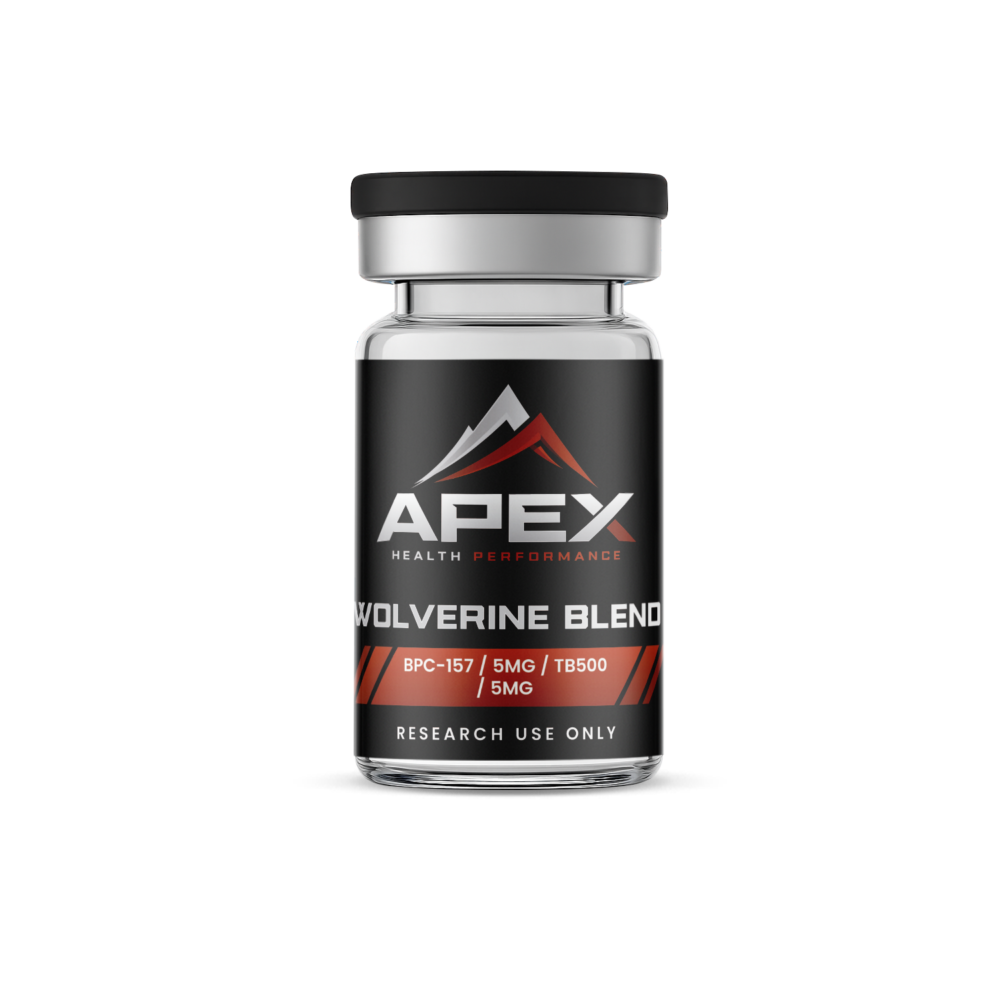
Wolverine Blend – BPC-157 (5mg) / TB500 (5mg) (Globally Sourced)
Price range: $120.00 through $200.00Select options This product has multiple variants. The options may be chosen on the product page -
-
Research Use Only
The following peer-reviewed publications reference compounds for laboratory and in vitro research purposes only. Not for human or animal use. Not intended to diagnose, treat, cure, or prevent any disease or condition.
Published Scientific Research
Peer-reviewed laboratory studies investigating research peptides
Involvement of Luteinizing Hormone in Alzheimer Disease Development in Elderly Women.
Accordingly, a large number of studies have demonstrated that an increase in LH levels is positively correlated with neuropathological, behavioral, and cognitive changes in AD. In addition, LH has been shown to promote amyloidogenic pathway of precursor protein metabolism and deposition of amyloid β plaques in the hippocampus, a region involved in AD.
View Full Study on PubMedDoping control container for urine stabilization: a pilot study.
The mixture consists of antimicrobial substances and protease inhibitors for the simultaneous inactivation of a wide range of proteolytic enzymes. The spray-coated chemical stabilization mixture was tested against microorganism elimination and steroid glucuronide degradation, as well as enzymatic breakdown of proteins, such as intact hCG, recombinant erythropoietin and small peptides (GHRPs, ipamorelin), induced by proteolytic enzymes.
View Full Study on PubMedMapping of HCG-receptor complexes.
Molecular forms of the porcine LH/CG receptor (pLHR) and complexes between hCG and either the full-length pLHR or its extracellular domain (ectodomain) have been produced in various recombinant systems. In COS cells and in the baculovirus insect cells system, the co-expression of the ecto- and endo-domains reconstituted a functional receptor where the association of the two domains seems to depend upon the presence of disulfide bridges.
View Full Study on PubMedVaccination for contraception.
Vaccination for birth control has several advantages over currently available methods of family planning and should prove an attractive addition to the contraceptive armamentarium both in developing countries and in a developed country such as Australia. Concerns have been voiced by consumer health advocates that vaccines, like other long acting contraceptive methods, may be abused by health authorities in developing countries and by their use in vulnerable groups such as aborigines in our own c
View Full Study on PubMedBiological markers during early pregnancy: trophoblastic signals of the peri-implantation period.
The peri-implantation period extends from the time the blastocyst is free in the uterus, through the processes of recognition and attachment, to the beginning of trophoblast differentiation and the interactions between the embryo and the uterine endometrium which initiate establishment of the hemochorial placenta. It is during the peri-implantation period that the embryo and hormonally regulated endometrial cells appear to be most sensitive to factors which introduce risk into the intrauterine e
View Full Study on PubMedPlacental proteins in the diagnosis and evaluation of the "elusive" early pregnancy.
For many many years much time and effort has been invested to identify, purify, and quantify markers of significant reproductive events. The search for such markers has been recently intensified with the widespread acceptance of IVF and ET as a treatment regimen for the management of certain causes of infertility. Now it is possible to monitor ovarian folliculogenesis and time of ovulation, successful fertilization, and subsequent nidation and the ensuing pregnancy. Following successful fertiliz
View Full Study on PubMedResearch Use Only
The following peer-reviewed publications reference compounds for laboratory and in vitro research purposes only. Not for human or animal use. Not intended to diagnose, treat, cure, or prevent any disease or condition.
Published Scientific Research
Peer-reviewed laboratory studies investigating research peptides
Involvement of Luteinizing Hormone in Alzheimer Disease Development in Elderly Women.
Accordingly, a large number of studies have demonstrated that an increase in LH levels is positively correlated with neuropathological, behavioral, and cognitive changes in AD. In addition, LH has been shown to promote amyloidogenic pathway of precursor protein metabolism and deposition of amyloid β plaques in the hippocampus, a region involved in AD.
View Full Study on PubMedDoping control container for urine stabilization: a pilot study.
The mixture consists of antimicrobial substances and protease inhibitors for the simultaneous inactivation of a wide range of proteolytic enzymes. The spray-coated chemical stabilization mixture was tested against microorganism elimination and steroid glucuronide degradation, as well as enzymatic breakdown of proteins, such as intact hCG, recombinant erythropoietin and small peptides (GHRPs, ipamorelin), induced by proteolytic enzymes.
View Full Study on PubMedMapping of HCG-receptor complexes.
Molecular forms of the porcine LH/CG receptor (pLHR) and complexes between hCG and either the full-length pLHR or its extracellular domain (ectodomain) have been produced in various recombinant systems. In COS cells and in the baculovirus insect cells system, the co-expression of the ecto- and endo-domains reconstituted a functional receptor where the association of the two domains seems to depend upon the presence of disulfide bridges.
View Full Study on PubMedVaccination for contraception.
Vaccination for birth control has several advantages over currently available methods of family planning and should prove an attractive addition to the contraceptive armamentarium both in developing countries and in a developed country such as Australia. Concerns have been voiced by consumer health advocates that vaccines, like other long acting contraceptive methods, may be abused by health authorities in developing countries and by their use in vulnerable groups such as aborigines in our own c
View Full Study on PubMedBiological markers during early pregnancy: trophoblastic signals of the peri-implantation period.
The peri-implantation period extends from the time the blastocyst is free in the uterus, through the processes of recognition and attachment, to the beginning of trophoblast differentiation and the interactions between the embryo and the uterine endometrium which initiate establishment of the hemochorial placenta. It is during the peri-implantation period that the embryo and hormonally regulated endometrial cells appear to be most sensitive to factors which introduce risk into the intrauterine e
View Full Study on PubMedPlacental proteins in the diagnosis and evaluation of the "elusive" early pregnancy.
For many many years much time and effort has been invested to identify, purify, and quantify markers of significant reproductive events. The search for such markers has been recently intensified with the widespread acceptance of IVF and ET as a treatment regimen for the management of certain causes of infertility. Now it is possible to monitor ovarian folliculogenesis and time of ovulation, successful fertilization, and subsequent nidation and the ensuing pregnancy. Following successful fertiliz
View Full Study on PubMedResearch Use Only
The following peer-reviewed publications reference compounds for laboratory and in vitro research purposes only. Not for human or animal use. Not intended to diagnose, treat, cure, or prevent any disease or condition.
Published Scientific Research
Peer-reviewed laboratory studies investigating research peptides
Involvement of Luteinizing Hormone in Alzheimer Disease Development in Elderly Women.
Accordingly, a large number of studies have demonstrated that an increase in LH levels is positively correlated with neuropathological, behavioral, and cognitive changes in AD. In addition, LH has been shown to promote amyloidogenic pathway of precursor protein metabolism and deposition of amyloid β plaques in the hippocampus, a region involved in AD.
View Full Study on PubMed →Doping control container for urine stabilization: a pilot study.
The mixture consists of antimicrobial substances and protease inhibitors for the simultaneous inactivation of a wide range of proteolytic enzymes. The spray-coated chemical stabilization mixture was tested against microorganism elimination and steroid glucuronide degradation, as well as enzymatic breakdown of proteins, such as intact hCG, recombinant erythropoietin and small peptides (GHRPs, ipamorelin), induced by proteolytic enzymes.
View Full Study on PubMed →Mapping of HCG-receptor complexes.
Molecular forms of the porcine LH/CG receptor (pLHR) and complexes between hCG and either the full-length pLHR or its extracellular domain (ectodomain) have been produced in various recombinant systems. In COS cells and in the baculovirus insect cells system, the co-expression of the ecto- and endo-domains reconstituted a functional receptor where the association of the two domains seems to depend upon the presence of disulfide bridges.
View Full Study on PubMed →Vaccination for contraception.
Vaccination for birth control has several advantages over currently available methods of family planning and should prove an attractive addition to the contraceptive armamentarium both in developing countries and in a developed country such as Australia. Concerns have been voiced by consumer health advocates that vaccines, like other long acting contraceptive methods, may be abused by health authorities in developing countries and by their use in vulnerable groups such as aborigines in our own c
View Full Study on PubMed →Biological markers during early pregnancy: trophoblastic signals of the peri-implantation period.
The peri-implantation period extends from the time the blastocyst is free in the uterus, through the processes of recognition and attachment, to the beginning of trophoblast differentiation and the interactions between the embryo and the uterine endometrium which initiate establishment of the hemochorial placenta. It is during the peri-implantation period that the embryo and hormonally regulated endometrial cells appear to be most sensitive to factors which introduce risk into the intrauterine e
View Full Study on PubMed →Placental proteins in the diagnosis and evaluation of the "elusive" early pregnancy.
For many many years much time and effort has been invested to identify, purify, and quantify markers of significant reproductive events. The search for such markers has been recently intensified with the widespread acceptance of IVF and ET as a treatment regimen for the management of certain causes of infertility. Now it is possible to monitor ovarian folliculogenesis and time of ovulation, successful fertilization, and subsequent nidation and the ensuing pregnancy. Following successful fertiliz
View Full Study on PubMed →Important Research Notice: These products are research chemicals intended exclusively for in vitro laboratory research by qualified professionals. Not for human or animal consumption. Not approved by the FDA for any therapeutic purpose. Sold strictly for scientific research applications only.