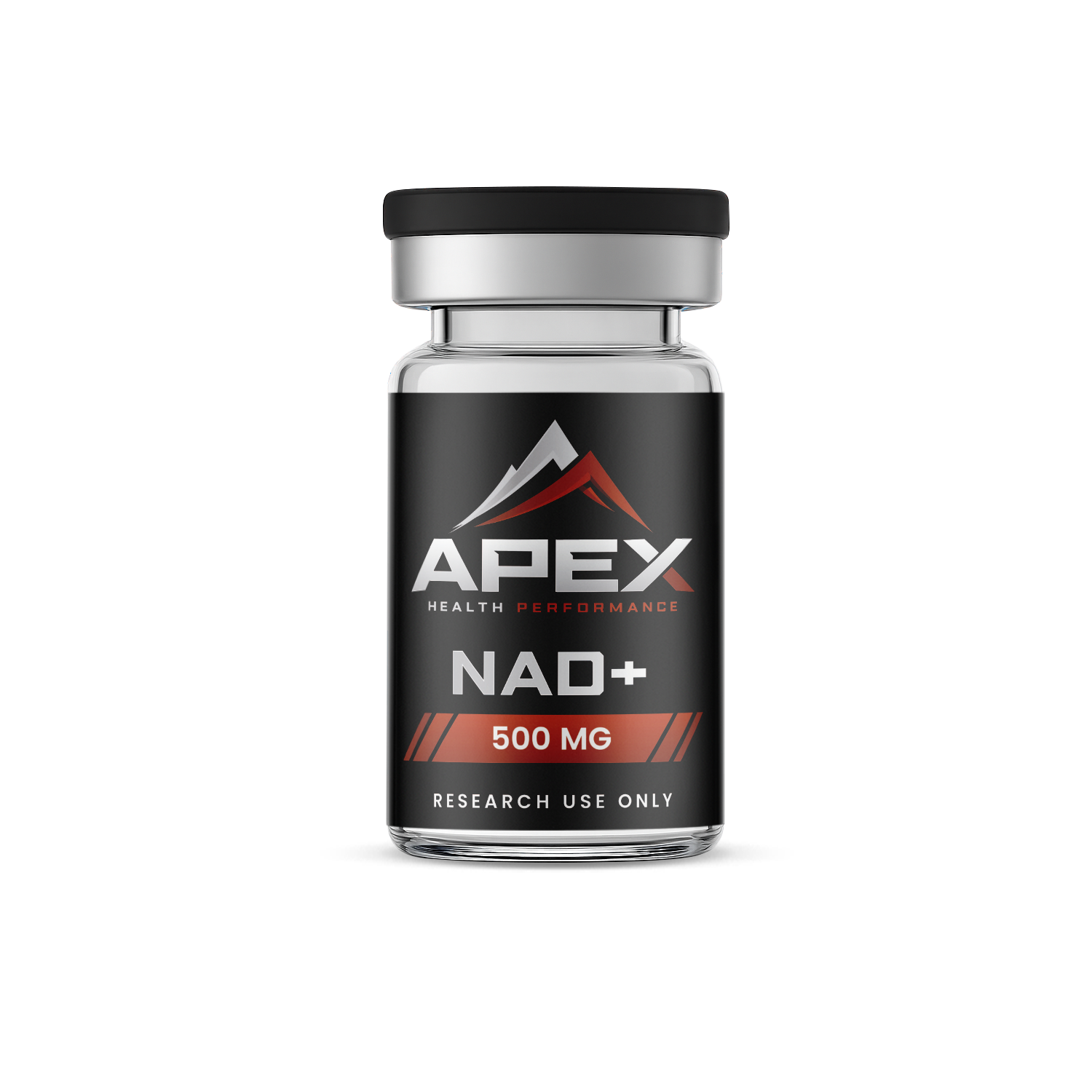
NAD+
Price range: $100.00 through $180.00
1 published certificate
Certificate information is temporarily unavailable.
Description
A single-component research material supplied for controlled research environments. Suitable for studies involving nucleotide cofactor characterization and method development in model systems.g., NADH/NADP)
• Stability characterization under laboratory storage conditions (temperature, pH, light)
For qualified research professionals and institutional laboratories. Not for human use.
Documentation & Quality Assurance
Each lot is sourced through our verified global supply chain with emphasis on traceability and quality control.These documents are reviewed internally and displayed as they become available.
Important Notice
This product is intended for laboratory research use only. It is not intended for human or veterinary use, and must not be used for diagnostic, therapeutic, or clinical purposes.
This material is not a drug, medical device, or dietary supplement, and has not been evaluated by the U.S. Food and Drug Administration.
Quality & Manufacturing
We work directly with the manufacturers. Each supplier is reviewed for reliability, documentation integrity, and transparency in testing.
Our minimum purity standard is 98%. Every batch we ship has its own certificate of analysis, and every certificate confirms identity, purity and net content. Where available, endotoxin testing results are included on Certificates of Analysis to verify laboratory purity; their inclusion is for research quality assessment only and does not imply suitability for human or veterinary use.
All research materials are sealed for integrity and packaged for stability during storage and transport from manufacturing through final delivery.
Additional information
| Weight | 0.0625 lbs |
|---|---|
| Dosage | 500mg, 1000mg |
Published Scientific Research
Explore the full library of peer-reviewed studies, clinical data, mechanism breakdowns, and molecular specifications for NAD+.
All research is sourced from PubMed-indexed journals for informational and educational purposes only. For Research Use Only (RUO). Not for human use.
View Full Research Library →Certificate of Analysis
Every batch undergoes independent third-party laboratory analysis to verify identity, potency, and safety. Testing includes quantitative assay verification, heavy metals screening, and comprehensive microbial analysis.
All Available COAs
Storage Instructions
All products from Apex Health Performance are manufactured using a lyophilization (freeze-drying) process. This method is designed to maintain product integrity and allows vials to remain stable during shipping for approximately 3–4 months.
Once a vial is reconstituted with bacteriostatic water, it should be stored in the refrigerator to help maintain stability. Under these conditions, reconstituted material is generally considered stable for up to 30 days.
Lyophilization is a dehydration technique in which compounds are frozen and then exposed to low pressure. This causes the water in the vial to sublimate directly from solid to gas, leaving behind a stable, crystalline white structure. This powder can be kept at room temperature until reconstitution.
Upon receipt, products should be stored away from heat and light. For short-term use, refrigeration at approximately 4°C (39°F) is suitable. For long-term storage (several months to years), vials may be placed in a freezer at approximately -80°C (-112°F). Freezing is the preferred method for preserving product stability over extended periods.
⚠️ Important Notice:
These products are intended for research use only. Not for human consumption.
Related products
Research Use Only
The following peer-reviewed publications reference compounds for laboratory and in vitro research purposes only. Not for human or animal use. Not intended to diagnose, treat, cure, or prevent any disease or condition.
Published Scientific Research
Peer-reviewed laboratory studies investigating nad+ precursors
α-Ketoglutarate improves cardiac insufficiency through NAD-SIRT1 signaling-mediated mitophagy and ferroptosis in pressure overload-induced mice.
However, the myocardial protective mechanism of AKG remains unclear. Metabolites of the malate-aspartate shuttle (MAS) were increased, but the TCA cycle and fatty acid metabolism pathway could be inhibited in the myocardium of TAC mice after AKG supplementation.
View Full Study on PubMedNampt/SIRT2/LDHA pathway-mediated lactate production regulates follicular dysplasia in polycystic ovary syndrome.
Furthermore, target energy metabolomics and transcriptome results showed that NMN supplementation ameliorates the lactate production by activating glycolytic process in the ovary. Overall, these benefits of NMN were elucidated and the Nampt/SIRT2/LDHA pathway mediated lactate production in granulosa cells played an important role in the improvement of follicular development disorders in PCOS.
View Full Study on PubMedPhase separation of FSP1 promotes ferroptosis.
icFSP1-induced FSP1 condensates show droplet-like properties consistent with phase separation, an emerging and widespread mechanism to modulate biological activity. Hence, our results suggest that icFSP1 exhibits a unique mechanism of action and synergizes with ferroptosis-inducing agents to potentiate the ferroptotic cell death response, thus providing a rationale for targeting FSP1-dependent phase separation as an efficient anti-cancer therapy.
View Full Study on PubMedNicotine rebalances NAD homeostasis and improves aging-related symptoms in male mice by enhancing NAMPT activity.
Nicotine, a metabolite of the NAD metabolic pathway, has been found to possess anti-inflammatory and neuroprotective properties, yet the underlying molecular mechanisms remained unknown. Here we find that, independent of nicotinic acetylcholine receptors, low-dose nicotine can restore the age-related decline of NAMPT activity through SIRT1 binding and subsequent deacetylation of NAMPT, thus increasing NAD synthesis.
View Full Study on PubMedCD38 Mediates Lung Fibrosis by Promoting Alveolar Epithelial Cell Aging.
CD38 was primarily located in the AECs of human lung parenchyma and was markedly induced in IPF AECs. Furthermore, we demonstrated that genetic and pharmacological inactivation of CD38 improved these NAD dependent events and ameliorated bleomycin-induced lung fibrosis.
View Full Study on PubMedNAD metabolism, stemness, the immune response, and cancer.
A deregulation of the NAD levels has been associated with metabolic diseases and aging-related diseases, including neurodegeneration, defective immune responses, and cancer. Because of the complex network of pathways in which NAD is essential, the important role of NAD and its key generating enzyme, NAMPT, in cancer is understandable.
View Full Study on PubMedResearch Use Only
The following peer-reviewed publications reference compounds for laboratory and in vitro research purposes only. Not for human or animal use. Not intended to diagnose, treat, cure, or prevent any disease or condition.
Published Scientific Research
Peer-reviewed laboratory studies investigating nad+ precursors
α-Ketoglutarate improves cardiac insufficiency through NAD-SIRT1 signaling-mediated mitophagy and ferroptosis in pressure overload-induced mice.
However, the myocardial protective mechanism of AKG remains unclear. Metabolites of the malate-aspartate shuttle (MAS) were increased, but the TCA cycle and fatty acid metabolism pathway could be inhibited in the myocardium of TAC mice after AKG supplementation.
View Full Study on PubMedNampt/SIRT2/LDHA pathway-mediated lactate production regulates follicular dysplasia in polycystic ovary syndrome.
Furthermore, target energy metabolomics and transcriptome results showed that NMN supplementation ameliorates the lactate production by activating glycolytic process in the ovary. Overall, these benefits of NMN were elucidated and the Nampt/SIRT2/LDHA pathway mediated lactate production in granulosa cells played an important role in the improvement of follicular development disorders in PCOS.
View Full Study on PubMedPhase separation of FSP1 promotes ferroptosis.
icFSP1-induced FSP1 condensates show droplet-like properties consistent with phase separation, an emerging and widespread mechanism to modulate biological activity. Hence, our results suggest that icFSP1 exhibits a unique mechanism of action and synergizes with ferroptosis-inducing agents to potentiate the ferroptotic cell death response, thus providing a rationale for targeting FSP1-dependent phase separation as an efficient anti-cancer therapy.
View Full Study on PubMedNicotine rebalances NAD homeostasis and improves aging-related symptoms in male mice by enhancing NAMPT activity.
Nicotine, a metabolite of the NAD metabolic pathway, has been found to possess anti-inflammatory and neuroprotective properties, yet the underlying molecular mechanisms remained unknown. Here we find that, independent of nicotinic acetylcholine receptors, low-dose nicotine can restore the age-related decline of NAMPT activity through SIRT1 binding and subsequent deacetylation of NAMPT, thus increasing NAD synthesis.
View Full Study on PubMedCD38 Mediates Lung Fibrosis by Promoting Alveolar Epithelial Cell Aging.
CD38 was primarily located in the AECs of human lung parenchyma and was markedly induced in IPF AECs. Furthermore, we demonstrated that genetic and pharmacological inactivation of CD38 improved these NAD dependent events and ameliorated bleomycin-induced lung fibrosis.
View Full Study on PubMedNAD metabolism, stemness, the immune response, and cancer.
A deregulation of the NAD levels has been associated with metabolic diseases and aging-related diseases, including neurodegeneration, defective immune responses, and cancer. Because of the complex network of pathways in which NAD is essential, the important role of NAD and its key generating enzyme, NAMPT, in cancer is understandable.
View Full Study on PubMedResearch Use Only
The following peer-reviewed publications reference compounds for laboratory and in vitro research purposes only. Not for human or animal use. Not intended to diagnose, treat, cure, or prevent any disease or condition.
Published Scientific Research
Peer-reviewed laboratory studies investigating nad+ precursors
α-Ketoglutarate improves cardiac insufficiency through NAD-SIRT1 signaling-mediated mitophagy and ferroptosis in pressure overload-induced mice.
However, the myocardial protective mechanism of AKG remains unclear. Metabolites of the malate-aspartate shuttle (MAS) were increased, but the TCA cycle and fatty acid metabolism pathway could be inhibited in the myocardium of TAC mice after AKG supplementation.
View Full Study on PubMed →Nampt/SIRT2/LDHA pathway-mediated lactate production regulates follicular dysplasia in polycystic ovary syndrome.
Furthermore, target energy metabolomics and transcriptome results showed that NMN supplementation ameliorates the lactate production by activating glycolytic process in the ovary. Overall, these benefits of NMN were elucidated and the Nampt/SIRT2/LDHA pathway mediated lactate production in granulosa cells played an important role in the improvement of follicular development disorders in PCOS.
View Full Study on PubMed →Phase separation of FSP1 promotes ferroptosis.
icFSP1-induced FSP1 condensates show droplet-like properties consistent with phase separation, an emerging and widespread mechanism to modulate biological activity. Hence, our results suggest that icFSP1 exhibits a unique mechanism of action and synergizes with ferroptosis-inducing agents to potentiate the ferroptotic cell death response, thus providing a rationale for targeting FSP1-dependent phase separation as an efficient anti-cancer therapy.
View Full Study on PubMed →Nicotine rebalances NAD homeostasis and improves aging-related symptoms in male mice by enhancing NAMPT activity.
Nicotine, a metabolite of the NAD metabolic pathway, has been found to possess anti-inflammatory and neuroprotective properties, yet the underlying molecular mechanisms remained unknown. Here we find that, independent of nicotinic acetylcholine receptors, low-dose nicotine can restore the age-related decline of NAMPT activity through SIRT1 binding and subsequent deacetylation of NAMPT, thus increasing NAD synthesis.
View Full Study on PubMed →CD38 Mediates Lung Fibrosis by Promoting Alveolar Epithelial Cell Aging.
CD38 was primarily located in the AECs of human lung parenchyma and was markedly induced in IPF AECs. Furthermore, we demonstrated that genetic and pharmacological inactivation of CD38 improved these NAD dependent events and ameliorated bleomycin-induced lung fibrosis.
View Full Study on PubMed →NAD metabolism, stemness, the immune response, and cancer.
A deregulation of the NAD levels has been associated with metabolic diseases and aging-related diseases, including neurodegeneration, defective immune responses, and cancer. Because of the complex network of pathways in which NAD is essential, the important role of NAD and its key generating enzyme, NAMPT, in cancer is understandable.
View Full Study on PubMed →Important Research Notice: These products are research chemicals intended exclusively for in vitro laboratory research by qualified professionals. Not for human or animal consumption. Not approved by the FDA for any therapeutic purpose. Sold strictly for scientific research applications only.