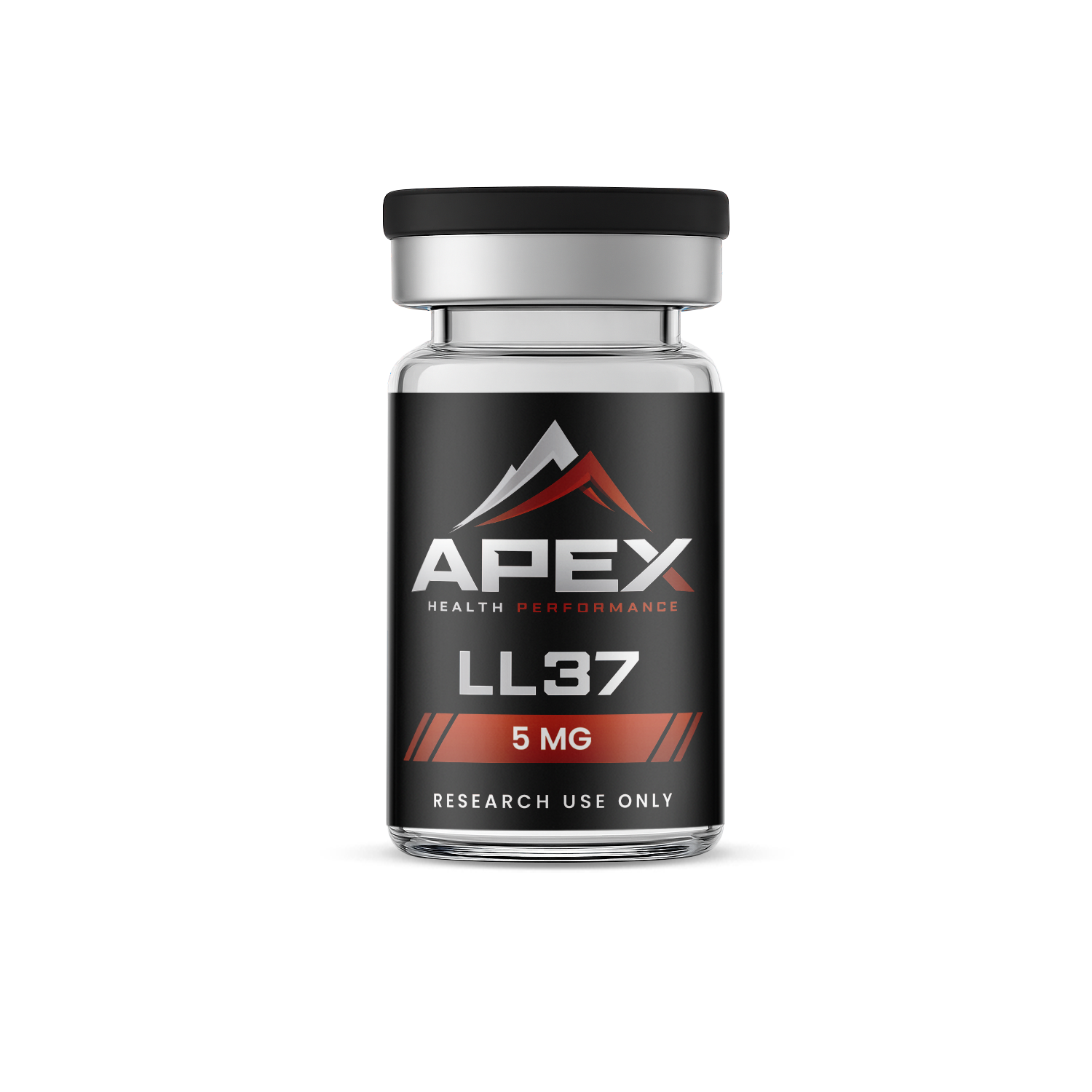
LL37 (5mg)
$120.00
1 published certificate
Certificate information is temporarily unavailable.
Description
A single-component research material supplied for controlled research environments. LL-37 is a synthetic cathelicidin-derived peptide used in research exploring innate immunity, antimicrobial pathways, and wound-healing models in controlled systems.
Composition
• LL-37
• Appearance: Lyophilized powder in a sealed research vial
Research Focus (non-clinical)
• Characterization of LL-37 in antimicrobial activity assays
• Studies on immune modulation and inflammatory pathway signaling
• Evaluation in cell culture and tissue models related to epithelial repair
• Stability and solubility profiling under laboratory storage conditions
For qualified research professionals and institutional laboratories. Not for human use.
Documentation & Quality Assurance
Each lot is sourced through our verified global supply chain with emphasis on traceability and quality control.These documents are reviewed internally and displayed as they become available.
Important Notice
This product is intended for laboratory research use only. It is not intended for human or veterinary use, and must not be used for diagnostic, therapeutic, or clinical purposes.
This material is not a drug, medical device, or dietary supplement, and has not been evaluated by the U.S. Food and Drug Administration.
Quality & Manufacturing
We work directly with the manufacturers. Each supplier is reviewed for reliability, documentation integrity, and transparency in testing.
Our minimum purity standard is 98%. Every batch we ship has its own certificate of analysis, and every certificate confirms identity, purity and net content. Where available, endotoxin testing results are included on Certificates of Analysis to verify laboratory purity; their inclusion is for research quality assessment only and does not imply suitability for human or veterinary use.
All research materials are sealed for integrity and packaged for stability during storage and transport from manufacturing through final delivery.
Additional information
| Weight | 0.0625 lbs |
|---|
Certificate of Analysis
Every batch undergoes independent third-party laboratory analysis to verify identity, potency, and safety. Testing includes quantitative assay verification, heavy metals screening, and comprehensive microbial analysis.
View Certificate of AnalysisStorage Instructions
All products from Apex Health Performance are manufactured using a lyophilization (freeze-drying) process. This method is designed to maintain product integrity and allows vials to remain stable during shipping for approximately 3–4 months.
Once a vial is reconstituted with bacteriostatic water, it should be stored in the refrigerator to help maintain stability. Under these conditions, reconstituted material is generally considered stable for up to 30 days.
Lyophilization is a dehydration technique in which compounds are frozen and then exposed to low pressure. This causes the water in the vial to sublimate directly from solid to gas, leaving behind a stable, crystalline white structure. This powder can be kept at room temperature until reconstitution.
Upon receipt, products should be stored away from heat and light. For short-term use, refrigeration at approximately 4°C (39°F) is suitable. For long-term storage (several months to years), vials may be placed in a freezer at approximately -80°C (-112°F). Freezing is the preferred method for preserving product stability over extended periods.
⚠️ Important Notice:
These products are intended for research use only. Not for human consumption.
Related products
-
-
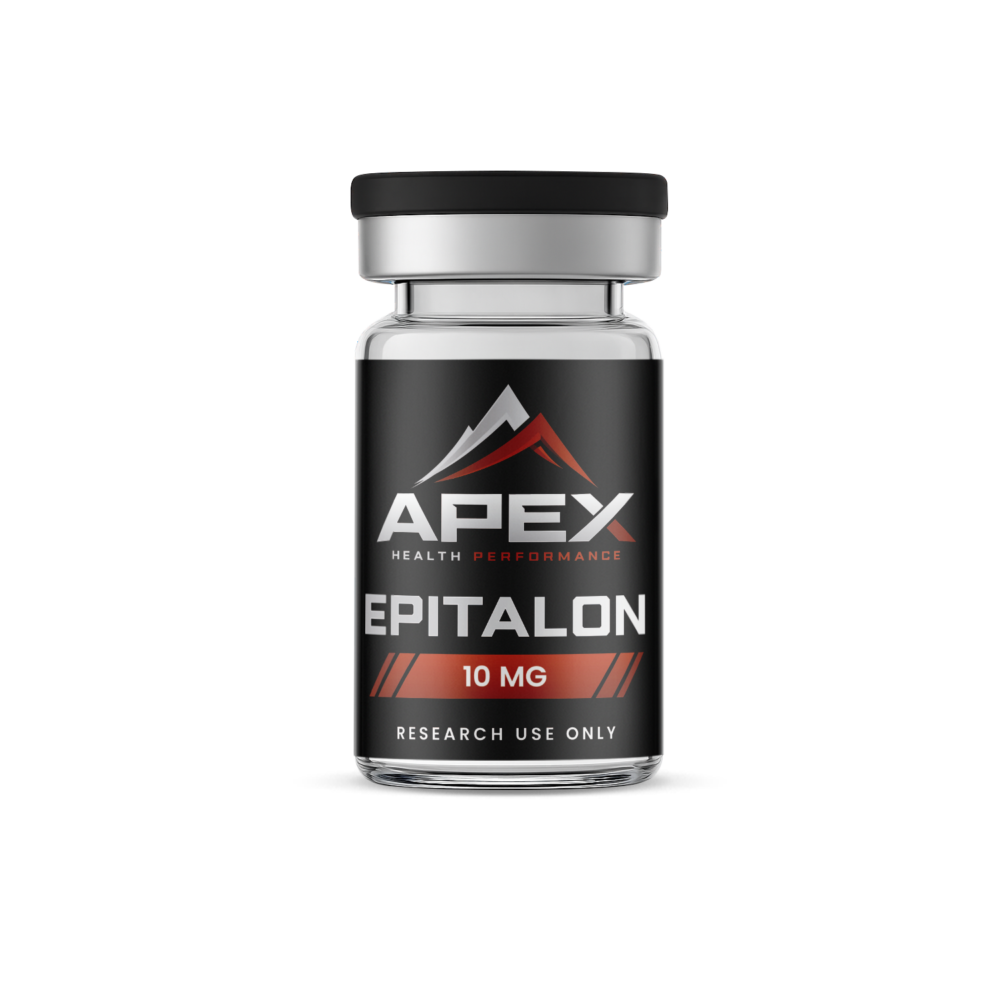
Epitalon
Price range: $100.00 through $150.00Select options This product has multiple variants. The options may be chosen on the product page -
Research Use Only
The following peer-reviewed publications reference compounds for laboratory and in vitro research purposes only. Not for human or animal use. Not intended to diagnose, treat, cure, or prevent any disease or condition.
Published Scientific Research
Peer-reviewed laboratory studies investigating metabolic research peptides
A sonosensitive diphenylalanine-based broad-spectrum antimicrobial peptide.
The antimicrobial effect of antimicrobial peptides is typically slow; they can be rapidly biodegraded and often have non-selective toxicity and elaborate sequences. Here we report a short peptide that is activated by ultrasound, that shows high broad-spectrum antibacterial efficiency (>99%) against clinically isolated methicillin-resistant bacteria (specifically, Staphylococcus aureus, Escherichia coli, Staphylococcus epidermidis, Enterobacter cancerogenus and Pseudomonas aeruginosa) with 15 m
View Full Study on PubMedMilk-derived extracellular vesicles functionalized with anti-tumour necrosis factor-α nanobody and anti-microbial peptide alleviate ulcerative colitis in mice.
In mice with chronic UC, simultaneously introducing VHH and an antimicrobial peptide LL37 into EV (EV), then administering orally improved intestinal barrier, inflammation and microbiota balance, resulted in relief of UC-induced depression and anxiety. Collectively, we demonstrated that oral delivery of EV effectively alleviated UC in mice and TAT efficiently loaded biologics into EV to confer protection from degradation in the gastrointestinal tract.
View Full Study on PubMedOpposing Roles of Antimicrobial Peptides in Skin Cancers.
In this review, we describe the roles and mechanisms of AMPs in skin cancer development.
View Full Study on PubMedScreening Peptides that Activate MRGPRX2 using Engineered HEK Cells.
Identifying ligands specific to therapeutically significant cell receptors is crucial for many applications, including the design and development of new therapeutics. Mas related G-protein receptor-X2 (MRGPRX2) is an important receptor that regulates mast cell activation and, thus, directs the general immune response.
View Full Study on PubMedAntiviral Activities of Human Host Defense Peptides.
Peptides with broad-spectrum antimicrobial activity are found widely expressed throughout nature. As they participate in a number of different aspects of innate immunity in mammals, they have been termed Host Defense Peptides (HDPs). Due to their common structural features, including an amphipathic structure and cationic charge, they have been widely shown to interact with and disrupt microbial membranes. Thus, it is not surprising that human HDPs have activity against enveloped viruses as well
View Full Study on PubMedEfficacy of Antigonococcal CMP-Nonulosonate Therapeutics Require Cathelicidins.
Here, we identify a key mechanism of action for the efficacy of CMP-NulOs.
View Full Study on PubMedResearch Use Only
The following peer-reviewed publications reference compounds for laboratory and in vitro research purposes only. Not for human or animal use. Not intended to diagnose, treat, cure, or prevent any disease or condition.
Published Scientific Research
Peer-reviewed laboratory studies investigating metabolic research peptides
A sonosensitive diphenylalanine-based broad-spectrum antimicrobial peptide.
The antimicrobial effect of antimicrobial peptides is typically slow; they can be rapidly biodegraded and often have non-selective toxicity and elaborate sequences. Here we report a short peptide that is activated by ultrasound, that shows high broad-spectrum antibacterial efficiency (>99%) against clinically isolated methicillin-resistant bacteria (specifically, Staphylococcus aureus, Escherichia coli, Staphylococcus epidermidis, Enterobacter cancerogenus and Pseudomonas aeruginosa) with 15 m
View Full Study on PubMedMilk-derived extracellular vesicles functionalized with anti-tumour necrosis factor-α nanobody and anti-microbial peptide alleviate ulcerative colitis in mice.
In mice with chronic UC, simultaneously introducing VHH and an antimicrobial peptide LL37 into EV (EV), then administering orally improved intestinal barrier, inflammation and microbiota balance, resulted in relief of UC-induced depression and anxiety. Collectively, we demonstrated that oral delivery of EV effectively alleviated UC in mice and TAT efficiently loaded biologics into EV to confer protection from degradation in the gastrointestinal tract.
View Full Study on PubMedOpposing Roles of Antimicrobial Peptides in Skin Cancers.
In this review, we describe the roles and mechanisms of AMPs in skin cancer development.
View Full Study on PubMedScreening Peptides that Activate MRGPRX2 using Engineered HEK Cells.
Identifying ligands specific to therapeutically significant cell receptors is crucial for many applications, including the design and development of new therapeutics. Mas related G-protein receptor-X2 (MRGPRX2) is an important receptor that regulates mast cell activation and, thus, directs the general immune response.
View Full Study on PubMedAntiviral Activities of Human Host Defense Peptides.
Peptides with broad-spectrum antimicrobial activity are found widely expressed throughout nature. As they participate in a number of different aspects of innate immunity in mammals, they have been termed Host Defense Peptides (HDPs). Due to their common structural features, including an amphipathic structure and cationic charge, they have been widely shown to interact with and disrupt microbial membranes. Thus, it is not surprising that human HDPs have activity against enveloped viruses as well
View Full Study on PubMedEfficacy of Antigonococcal CMP-Nonulosonate Therapeutics Require Cathelicidins.
Here, we identify a key mechanism of action for the efficacy of CMP-NulOs.
View Full Study on PubMedResearch Use Only
The following peer-reviewed publications reference compounds for laboratory and in vitro research purposes only. Not for human or animal use. Not intended to diagnose, treat, cure, or prevent any disease or condition.
Published Scientific Research
Peer-reviewed laboratory studies investigating metabolic research peptides
A sonosensitive diphenylalanine-based broad-spectrum antimicrobial peptide.
The antimicrobial effect of antimicrobial peptides is typically slow; they can be rapidly biodegraded and often have non-selective toxicity and elaborate sequences. Here we report a short peptide that is activated by ultrasound, that shows high broad-spectrum antibacterial efficiency (>99%) against clinically isolated methicillin-resistant bacteria (specifically, Staphylococcus aureus, Escherichia coli, Staphylococcus epidermidis, Enterobacter cancerogenus and Pseudomonas aeruginosa) with 15 m
View Full Study on PubMed →Milk-derived extracellular vesicles functionalized with anti-tumour necrosis factor-α nanobody and anti-microbial peptide alleviate ulcerative colitis in mice.
In mice with chronic UC, simultaneously introducing VHH and an antimicrobial peptide LL37 into EV (EV), then administering orally improved intestinal barrier, inflammation and microbiota balance, resulted in relief of UC-induced depression and anxiety. Collectively, we demonstrated that oral delivery of EV effectively alleviated UC in mice and TAT efficiently loaded biologics into EV to confer protection from degradation in the gastrointestinal tract.
View Full Study on PubMed →Opposing Roles of Antimicrobial Peptides in Skin Cancers.
In this review, we describe the roles and mechanisms of AMPs in skin cancer development.
View Full Study on PubMed →Screening Peptides that Activate MRGPRX2 using Engineered HEK Cells.
Identifying ligands specific to therapeutically significant cell receptors is crucial for many applications, including the design and development of new therapeutics. Mas related G-protein receptor-X2 (MRGPRX2) is an important receptor that regulates mast cell activation and, thus, directs the general immune response.
View Full Study on PubMed →Antiviral Activities of Human Host Defense Peptides.
Peptides with broad-spectrum antimicrobial activity are found widely expressed throughout nature. As they participate in a number of different aspects of innate immunity in mammals, they have been termed Host Defense Peptides (HDPs). Due to their common structural features, including an amphipathic structure and cationic charge, they have been widely shown to interact with and disrupt microbial membranes. Thus, it is not surprising that human HDPs have activity against enveloped viruses as well
View Full Study on PubMed →Efficacy of Antigonococcal CMP-Nonulosonate Therapeutics Require Cathelicidins.
Here, we identify a key mechanism of action for the efficacy of CMP-NulOs.
View Full Study on PubMed →Important Research Notice: These products are research chemicals intended exclusively for in vitro laboratory research by qualified professionals. Not for human or animal consumption. Not approved by the FDA for any therapeutic purpose. Sold strictly for scientific research applications only.