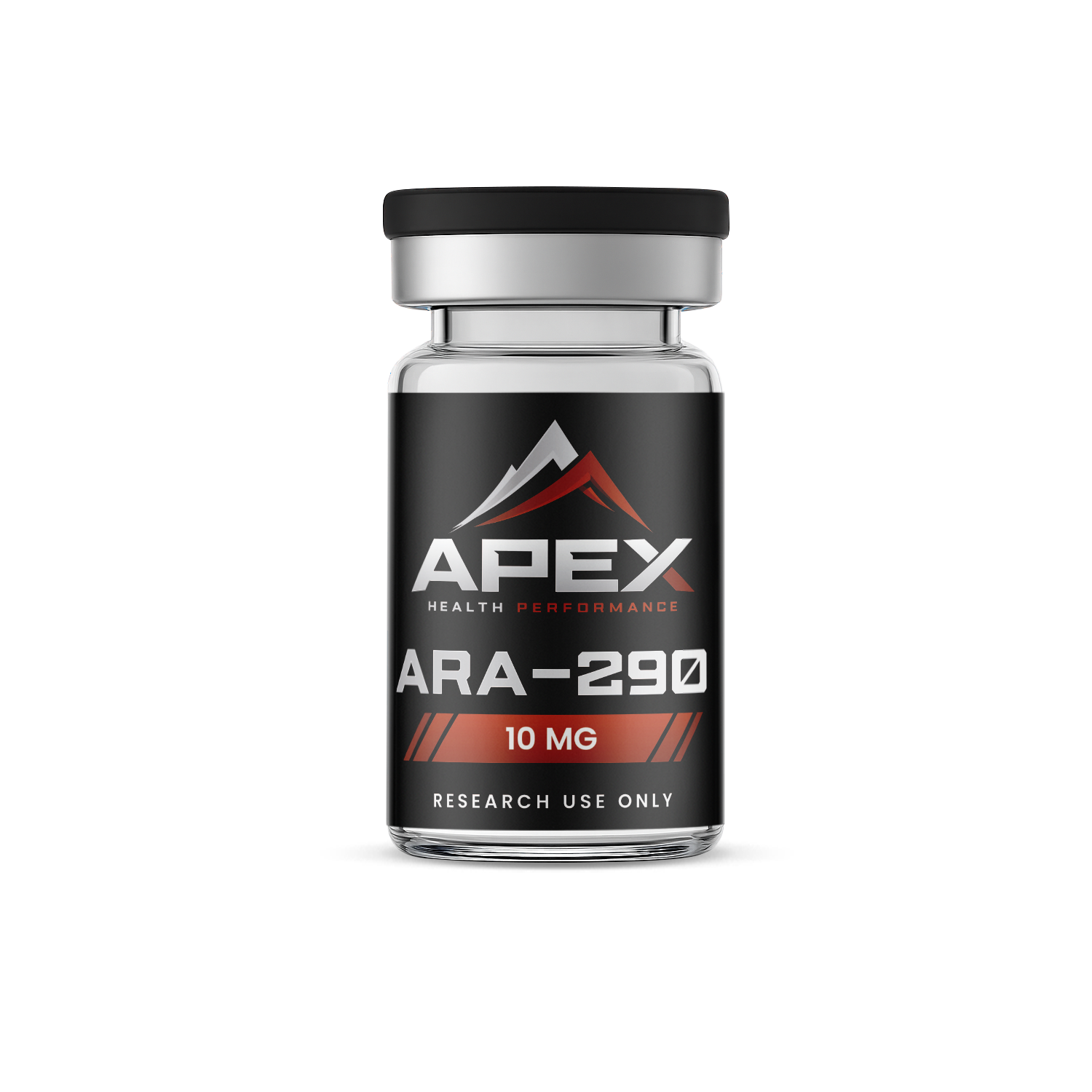
ARA-290 (10mg)
$150.00
1 published certificate
Certificate information is temporarily unavailable.
Description
A single-component research material supplied for controlled research environments. ARA-290 (10 mg) is a synthetic peptide fragment of erythropoietin (EPO) designed for research investigating innate immune signaling, tissue-protective pathways, and inflammatory response modulation in model systems.Not for human use.
Documentation & Quality Assurance
Each lot is sourced through our verified global supply chain with emphasis on traceability and quality control.These documents are reviewed internally and displayed as they become available.
Important Notice
This product is intended for laboratory research use only. It is not intended for human or veterinary use, and must not be used for diagnostic, therapeutic, or clinical purposes.
This material is not a drug, medical device, or dietary supplement, and has not been evaluated by the U.S. Food and Drug Administration.
Quality & Manufacturing
We work directly with the manufacturers. Each supplier is reviewed for reliability, documentation integrity, and transparency in testing.
Our minimum purity standard is 98%. Every batch we ship has its own certificate of analysis, and every certificate confirms identity, purity and net content. Where available, endotoxin testing results are included on Certificates of Analysis to verify laboratory purity; their inclusion is for research quality assessment only and does not imply suitability for human or veterinary use.
All research materials are sealed for integrity and packaged for stability during storage and transport from manufacturing through final delivery.
Additional information
| Weight | 0.0625 lbs |
|---|
Published Scientific Research
Explore the full library of peer-reviewed studies, clinical data, mechanism breakdowns, and molecular specifications for ARA-290 (10mg).
All research is sourced from PubMed-indexed journals for informational and educational purposes only. For Research Use Only (RUO). Not for human use.
View Full Research Library →Certificate of Analysis
Every batch undergoes independent third-party laboratory analysis to verify identity, potency, and safety. Testing includes quantitative assay verification, heavy metals screening, and comprehensive microbial analysis.
View Certificate of AnalysisStorage Instructions
All products from Apex Health Performance are manufactured using a lyophilization (freeze-drying) process. This method is designed to maintain product integrity and allows vials to remain stable during shipping for approximately 3–4 months.
Once a vial is reconstituted with bacteriostatic water, it should be stored in the refrigerator to help maintain stability. Under these conditions, reconstituted material is generally considered stable for up to 30 days.
Lyophilization is a dehydration technique in which compounds are frozen and then exposed to low pressure. This causes the water in the vial to sublimate directly from solid to gas, leaving behind a stable, crystalline white structure. This powder can be kept at room temperature until reconstitution.
Upon receipt, products should be stored away from heat and light. For short-term use, refrigeration at approximately 4°C (39°F) is suitable. For long-term storage (several months to years), vials may be placed in a freezer at approximately -80°C (-112°F). Freezing is the preferred method for preserving product stability over extended periods.
⚠️ Important Notice:
These products are intended for research use only. Not for human consumption.
Related products
-
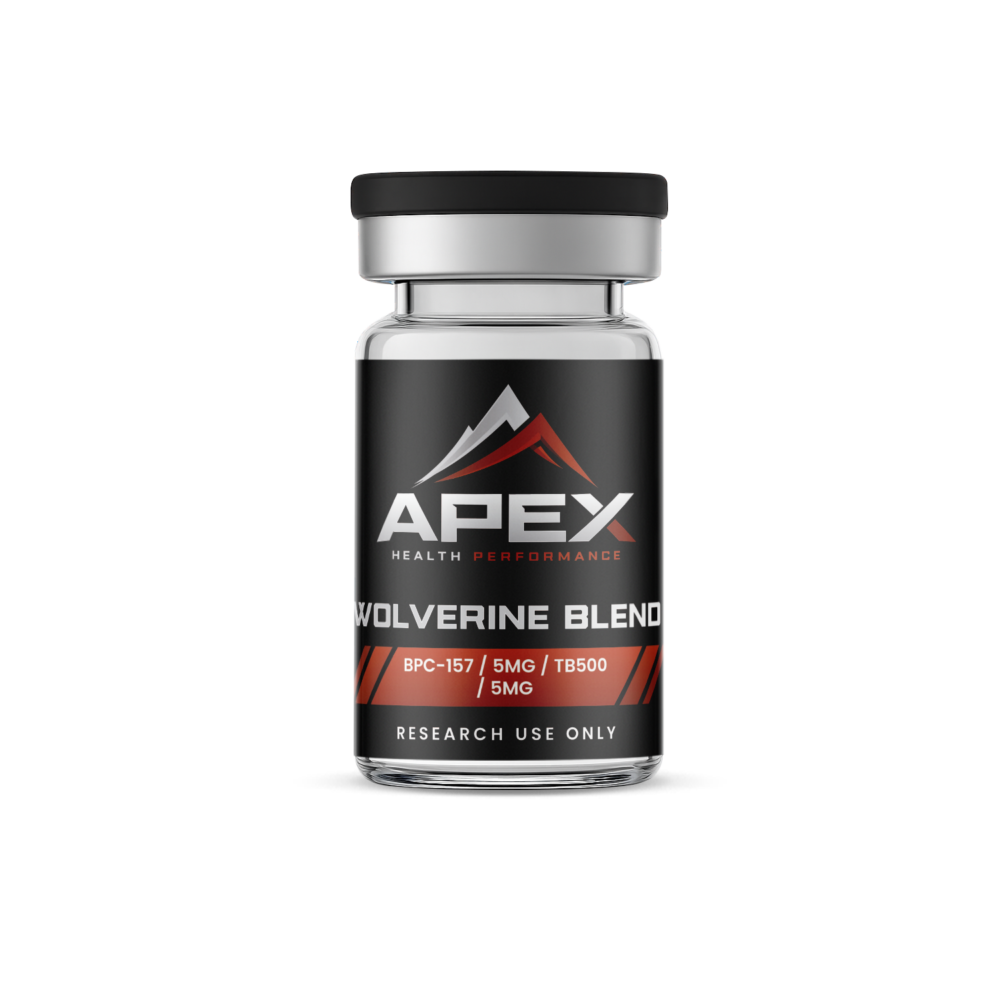
Wolverine Blend – BPC-157 (5mg) / TB500 (5mg) (Globally Sourced)
Price range: $120.00 through $200.00Select options This product has multiple variants. The options may be chosen on the product page -
-
Research Use Only
The following peer-reviewed publications reference compounds for laboratory and in vitro research purposes only. Not for human or animal use. Not intended to diagnose, treat, cure, or prevent any disease or condition.
Published Scientific Research
Peer-reviewed laboratory studies investigating immunomodulatory peptides
Phase-targeted erythropoietin derivatives for traumatic brain injury: bridging mechanisms to precision therapy.
Traumatic brain injury (TBI) unfolds through a well-defined chronology-hyperacute excitotoxic and inflammasome bursts, acute apoptotic and blood-brain-barrier failure, and subacute neurovascular remodeling-that no single-pathway drug can adequately cover. We first outline how specific modifications (carbamylation, desialylation, hyper-glycosylation or helix truncation) bias EPOR signaling toward PI3K-AKT and away from JAK2-STAT5.
View Full Study on PubMedThe protective effect of erythropoietin and its novel derived peptides in peripheral nerve injury.
The neuroprotective effects they exhibit have attracted continuous exploration of their mechanisms of action.
View Full Study on PubMedImprovement of Islet Allograft Function Using Cibinetide, an Innate Repair Receptor Ligand.
Previous findings suggest that cibinetide, a selective innate repair receptor agonist, exerts islet protective and antiinflammatory properties and improved transplant efficacy in syngeneic mouse PITx model. METHODS: Streptozotocin-induced diabetic C57BL/6N (H-2) mice were transplanted with 320 (marginal) or 450 (standard) islets from BALB/c (H-2) mice via the portal vein.
View Full Study on PubMedAn engineered non-erythropoietic erythropoietin-derived peptide, ARA290, attenuates doxorubicin induced genotoxicity and oxidative stress.
A nonhematopoietic peptide engineered from EPO, ARA 290, interacts selectively with the innate repair receptor and has similar possessions. Mechanisms behind the DOX-induced toxicities are enhanced level of oxidative damage, inflammation and apoptosis.
View Full Study on PubMedThe vasoreparative potential of endothelial colony-forming cells in the ischemic retina is enhanced by cibinetide, a non-hematopoietic erythropoietin mimetic.
METHODS: The effects of ARA290 on pro-survival signaling and function were assessed in ECFC cultures in vitro. Efficacy of ECFC transplantation therapy to promote retinal vascular repair in the presence and absence of ARA290 was studied in the oxygen induced retinopathy (OIR) model of retinal ischemia.
View Full Study on PubMedNon-erythropoietic erythropoietin-derived peptide protects mice from systemic lupus erythematosus.
Therefore, here we investigated the effects and potential mechanisms of ARA290 on SLE. The administration of ARA290 to pristane-induced SLE and MRL/lpr mice significantly suppressed the level of serum antinuclear autoantibodies (ANAs) and anti-dsDNA autoantibodies, reduced the deposition of IgG and C3, and ameliorated the nephritis symptoms.
View Full Study on PubMedResearch Use Only
The following peer-reviewed publications reference compounds for laboratory and in vitro research purposes only. Not for human or animal use. Not intended to diagnose, treat, cure, or prevent any disease or condition.
Published Scientific Research
Peer-reviewed laboratory studies investigating immunomodulatory peptides
Phase-targeted erythropoietin derivatives for traumatic brain injury: bridging mechanisms to precision therapy.
Traumatic brain injury (TBI) unfolds through a well-defined chronology-hyperacute excitotoxic and inflammasome bursts, acute apoptotic and blood-brain-barrier failure, and subacute neurovascular remodeling-that no single-pathway drug can adequately cover. We first outline how specific modifications (carbamylation, desialylation, hyper-glycosylation or helix truncation) bias EPOR signaling toward PI3K-AKT and away from JAK2-STAT5.
View Full Study on PubMedThe protective effect of erythropoietin and its novel derived peptides in peripheral nerve injury.
The neuroprotective effects they exhibit have attracted continuous exploration of their mechanisms of action.
View Full Study on PubMedMechanistic Approach for Protective Effect of ARA290, a Specific Ligand for the Erythropoietin/CD131 Heteroreceptor, against Cisplatin-Induced Nephrotoxicity, the Involvement of Apoptosis and Inflammation Pathways.
ARA 290, an 11-amino acid linear nonhematopoietic peptide derived from the three-dimensional structure of helix B of the erythropoietin (EPO), interacts selectively with the innate repair receptor (IRR) that arbitrates tissue protection. The aim of this study was to investigate the protective effects of ARA290 against cisplatin-induced nephrotoxicity.
View Full Study on PubMedImprovement of Islet Allograft Function Using Cibinetide, an Innate Repair Receptor Ligand.
Previous findings suggest that cibinetide, a selective innate repair receptor agonist, exerts islet protective and antiinflammatory properties and improved transplant efficacy in syngeneic mouse PITx model. METHODS: Streptozotocin-induced diabetic C57BL/6N (H-2) mice were transplanted with 320 (marginal) or 450 (standard) islets from BALB/c (H-2) mice via the portal vein.
View Full Study on PubMedAn engineered non-erythropoietic erythropoietin-derived peptide, ARA290, attenuates doxorubicin induced genotoxicity and oxidative stress.
A nonhematopoietic peptide engineered from EPO, ARA 290, interacts selectively with the innate repair receptor and has similar possessions. Mechanisms behind the DOX-induced toxicities are enhanced level of oxidative damage, inflammation and apoptosis.
View Full Study on PubMedThe vasoreparative potential of endothelial colony-forming cells in the ischemic retina is enhanced by cibinetide, a non-hematopoietic erythropoietin mimetic.
METHODS: The effects of ARA290 on pro-survival signaling and function were assessed in ECFC cultures in vitro. Efficacy of ECFC transplantation therapy to promote retinal vascular repair in the presence and absence of ARA290 was studied in the oxygen induced retinopathy (OIR) model of retinal ischemia.
View Full Study on PubMedResearch Use Only
The following peer-reviewed publications reference compounds for laboratory and in vitro research purposes only. Not for human or animal use. Not intended to diagnose, treat, cure, or prevent any disease or condition.
Published Scientific Research
Peer-reviewed laboratory studies investigating immunomodulatory peptides
Phase-targeted erythropoietin derivatives for traumatic brain injury: bridging mechanisms to precision therapy.
Traumatic brain injury (TBI) unfolds through a well-defined chronology-hyperacute excitotoxic and inflammasome bursts, acute apoptotic and blood-brain-barrier failure, and subacute neurovascular remodeling-that no single-pathway drug can adequately cover. We first outline how specific modifications (carbamylation, desialylation, hyper-glycosylation or helix truncation) bias EPOR signaling toward PI3K-AKT and away from JAK2-STAT5.
View Full Study on PubMed →The protective effect of erythropoietin and its novel derived peptides in peripheral nerve injury.
The neuroprotective effects they exhibit have attracted continuous exploration of their mechanisms of action.
View Full Study on PubMed →Improvement of Islet Allograft Function Using Cibinetide, an Innate Repair Receptor Ligand.
Previous findings suggest that cibinetide, a selective innate repair receptor agonist, exerts islet protective and antiinflammatory properties and improved transplant efficacy in syngeneic mouse PITx model. METHODS: Streptozotocin-induced diabetic C57BL/6N (H-2) mice were transplanted with 320 (marginal) or 450 (standard) islets from BALB/c (H-2) mice via the portal vein.
View Full Study on PubMed →An engineered non-erythropoietic erythropoietin-derived peptide, ARA290, attenuates doxorubicin induced genotoxicity and oxidative stress.
A nonhematopoietic peptide engineered from EPO, ARA 290, interacts selectively with the innate repair receptor and has similar possessions. Mechanisms behind the DOX-induced toxicities are enhanced level of oxidative damage, inflammation and apoptosis.
View Full Study on PubMed →The vasoreparative potential of endothelial colony-forming cells in the ischemic retina is enhanced by cibinetide, a non-hematopoietic erythropoietin mimetic.
METHODS: The effects of ARA290 on pro-survival signaling and function were assessed in ECFC cultures in vitro. Efficacy of ECFC transplantation therapy to promote retinal vascular repair in the presence and absence of ARA290 was studied in the oxygen induced retinopathy (OIR) model of retinal ischemia.
View Full Study on PubMed →Non-erythropoietic erythropoietin-derived peptide protects mice from systemic lupus erythematosus.
Therefore, here we investigated the effects and potential mechanisms of ARA290 on SLE. The administration of ARA290 to pristane-induced SLE and MRL/lpr mice significantly suppressed the level of serum antinuclear autoantibodies (ANAs) and anti-dsDNA autoantibodies, reduced the deposition of IgG and C3, and ameliorated the nephritis symptoms.
View Full Study on PubMed →Important Research Notice: These products are research chemicals intended exclusively for in vitro laboratory research by qualified professionals. Not for human or animal consumption. Not approved by the FDA for any therapeutic purpose. Sold strictly for scientific research applications only.