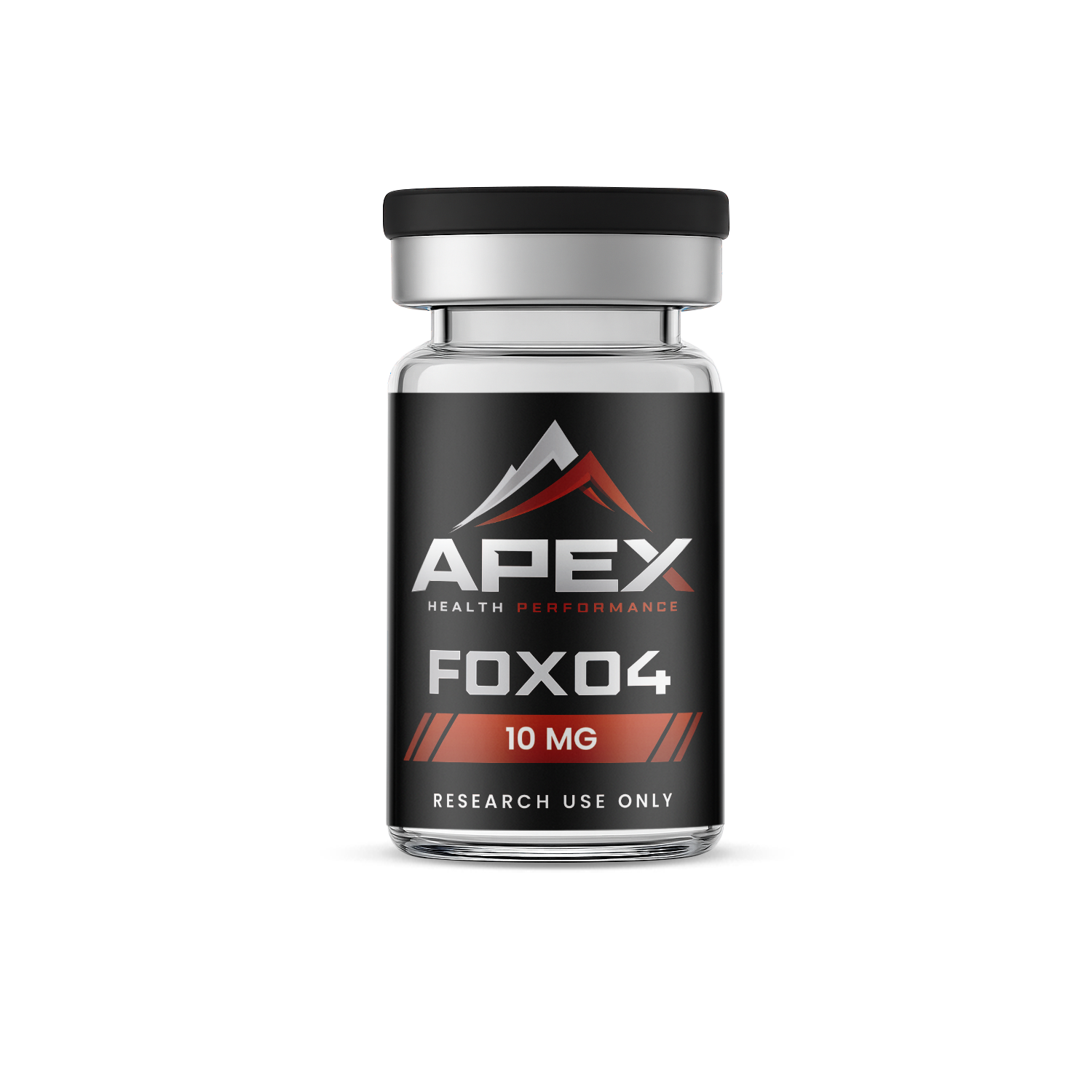
FOXO4 (10mg)
$320.00
1 published certificate
Certificate information is temporarily unavailable.
Description
A single-component research material supplied for controlled research environments. FOXO4 (10 mg) is a synthetic peptide fragment used in research exploring cellular senescence, apoptosis regulation, and FOXO transcription factor signaling pathways in controlled model systems.Not for human use.
Documentation & Quality Assurance
Each lot is sourced through our verified global supply chain with emphasis on traceability and quality control.These documents are reviewed internally and displayed as they become available.
Important Notice
This product is intended for laboratory research use only. It is not intended for human or veterinary use, and must not be used for diagnostic, therapeutic, or clinical purposes.
This material is not a drug, medical device, or dietary supplement, and has not been evaluated by the U.S. Food and Drug Administration.
Quality & Manufacturing
We work directly with the manufacturers. Each supplier is reviewed for reliability, documentation integrity, and transparency in testing.
Our minimum purity standard is 98%. Every batch we ship has its own certificate of analysis, and every certificate confirms identity, purity and net content. Where available, endotoxin testing results are included on Certificates of Analysis to verify laboratory purity; their inclusion is for research quality assessment only and does not imply suitability for human or veterinary use.
All research materials are sealed for integrity and packaged for stability during storage and transport from manufacturing through final delivery.
Additional information
| Weight | 0.0625 lbs |
|---|
Certificate of Analysis
Every batch undergoes independent third-party laboratory analysis to verify identity, potency, and safety. Testing includes quantitative assay verification, heavy metals screening, and comprehensive microbial analysis.
View Certificate of AnalysisStorage Instructions
All products from Apex Health Performance are manufactured using a lyophilization (freeze-drying) process. This method is designed to maintain product integrity and allows vials to remain stable during shipping for approximately 3–4 months.
Once a vial is reconstituted with bacteriostatic water, it should be stored in the refrigerator to help maintain stability. Under these conditions, reconstituted material is generally considered stable for up to 30 days.
Lyophilization is a dehydration technique in which compounds are frozen and then exposed to low pressure. This causes the water in the vial to sublimate directly from solid to gas, leaving behind a stable, crystalline white structure. This powder can be kept at room temperature until reconstitution.
Upon receipt, products should be stored away from heat and light. For short-term use, refrigeration at approximately 4°C (39°F) is suitable. For long-term storage (several months to years), vials may be placed in a freezer at approximately -80°C (-112°F). Freezing is the preferred method for preserving product stability over extended periods.
⚠️ Important Notice:
These products are intended for research use only. Not for human consumption.
Related products
-
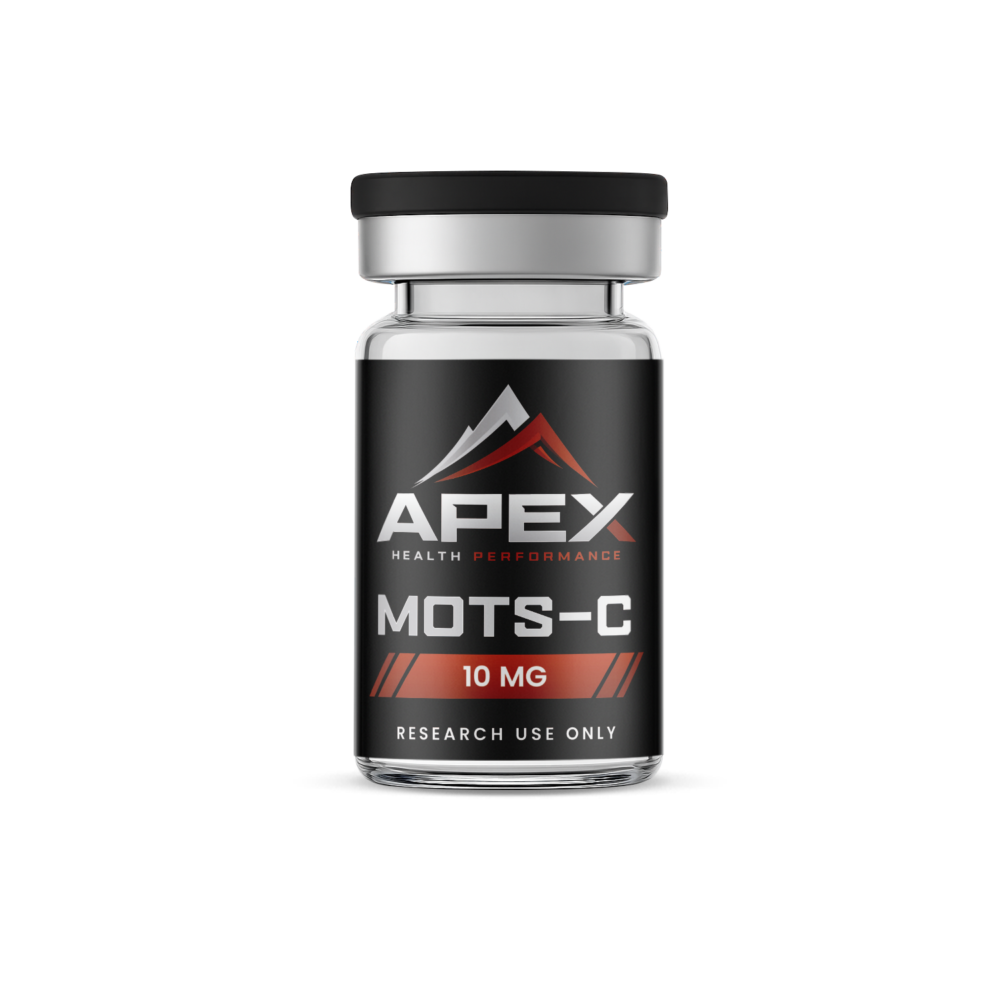
MOTS-c
Price range: $100.00 through $200.00Select options This product has multiple variants. The options may be chosen on the product page -
-
Research Use Only
The following peer-reviewed publications reference compounds for laboratory and in vitro research purposes only. Not for human or animal use. Not intended to diagnose, treat, cure, or prevent any disease or condition.
Published Scientific Research
Peer-reviewed laboratory studies investigating bioregulatory peptides
FOXO4 Facilitates Diabetic Retinopathy by Mediating KLF7 Transcription and Affecting the TLR4/MyD88/NF-κB Pathway.
Kruppel-like factor 7 (KLF7) takes part in high-glucose (HG)-prompted retinal pigment epithelial cell (RPE) apoptosis in vitro, the molecular mechanisms of KLF7-mediated DR pathogenesis are poorly studied. The toll-like receptor 4 (TLR4)/myeloid differentiation primary response 88 (MyD88)/nuclear Factor kappa-light-chain-enhancer of activated B cells (NF-κB) pathway was assessed by western blot and the NF-κB inhibitor BAY 11-7085.
View Full Study on PubMedFOXO4-DRI regulates endothelial cell senescence via the P53 signaling pathway.
This study innovatively focuses on the mechanism by which FOXO4-DRI induces apoptosis in senescent endothelial cells, demonstrating that it functions by activating the p53/BCL-2/Caspase-3 signaling pathway to promote selective apoptosis of these cells. Additionally, it investigates changes in endothelial cell function in senescent endothelial cells induced by oxygen-glucose deprivation (OGD), as well as the protein expression and interaction in the FOXO4-P53 signaling pathway.
View Full Study on PubMedFOXO4 suppresses cisplatin resistance of triple-negative breast cancer by inhibiting autophagy.
Moreover, the autophagic flux was enhanced in DDP-resistant cells. 3-MA enhanced the sensitivity of TNBC cells to DDP by inhibiting autophagy.
View Full Study on PubMedFOXO1 promotes cancer cell growth through MDM2-mediated p53 degradation.
FOXO1 is a transcription factor and potential tumor suppressor that is negatively regulated downstream of PI3K-PKB/AKT signaling. Paradoxically, FOXO also promotes tumor growth, but the detailed mechanisms behind this role of FOXO are not fully understood.
View Full Study on PubMedBioinformatics procedure for investigating senolytic (anti-aging) agents: A digital signal processing technique.
We found that enhanced senescence 2 (ES2) has a higher affinity for CR3 and BDB than FOXO4 and DRI, and that the interaction between CR3 and BDB is crucial for aging. Our findings are consistent with previous studies and reveal new insights into the mechanisms of senescence and senolytics.
View Full Study on PubMedSmurf2-Mediated Ubiquitination of FOXO4 Regulates Oxygen-glucose Deprivation/Reperfusion-induced Pyroptosis of Cortical Neurons.
This study sought to explore the molecular mechanism of Smurf2-mediated forkhead box O4 (FOXO4) ubiquitination in oxygen-glucose deprivation/ reperfusion (OGD/R)-induced pyroptosis of cortical neurons. Smurf2 overexpression promoted LDH release, reduced NLRP3, GSDMD-N, and cleaved-caspase-3 proteins, and decreased IL-1β and IL-18 concentrations.
View Full Study on PubMedResearch Use Only
The following peer-reviewed publications reference compounds for laboratory and in vitro research purposes only. Not for human or animal use. Not intended to diagnose, treat, cure, or prevent any disease or condition.
Published Scientific Research
Peer-reviewed laboratory studies investigating bioregulatory peptides
FOXO4 Facilitates Diabetic Retinopathy by Mediating KLF7 Transcription and Affecting the TLR4/MyD88/NF-κB Pathway.
Kruppel-like factor 7 (KLF7) takes part in high-glucose (HG)-prompted retinal pigment epithelial cell (RPE) apoptosis in vitro, the molecular mechanisms of KLF7-mediated DR pathogenesis are poorly studied. The toll-like receptor 4 (TLR4)/myeloid differentiation primary response 88 (MyD88)/nuclear Factor kappa-light-chain-enhancer of activated B cells (NF-κB) pathway was assessed by western blot and the NF-κB inhibitor BAY 11-7085.
View Full Study on PubMedFOXO4-DRI regulates endothelial cell senescence via the P53 signaling pathway.
This study innovatively focuses on the mechanism by which FOXO4-DRI induces apoptosis in senescent endothelial cells, demonstrating that it functions by activating the p53/BCL-2/Caspase-3 signaling pathway to promote selective apoptosis of these cells. Additionally, it investigates changes in endothelial cell function in senescent endothelial cells induced by oxygen-glucose deprivation (OGD), as well as the protein expression and interaction in the FOXO4-P53 signaling pathway.
View Full Study on PubMedFOXO4 suppresses cisplatin resistance of triple-negative breast cancer by inhibiting autophagy.
Moreover, the autophagic flux was enhanced in DDP-resistant cells. 3-MA enhanced the sensitivity of TNBC cells to DDP by inhibiting autophagy.
View Full Study on PubMedFOXO1 promotes cancer cell growth through MDM2-mediated p53 degradation.
FOXO1 is a transcription factor and potential tumor suppressor that is negatively regulated downstream of PI3K-PKB/AKT signaling. Paradoxically, FOXO also promotes tumor growth, but the detailed mechanisms behind this role of FOXO are not fully understood.
View Full Study on PubMedBioinformatics procedure for investigating senolytic (anti-aging) agents: A digital signal processing technique.
We found that enhanced senescence 2 (ES2) has a higher affinity for CR3 and BDB than FOXO4 and DRI, and that the interaction between CR3 and BDB is crucial for aging. Our findings are consistent with previous studies and reveal new insights into the mechanisms of senescence and senolytics.
View Full Study on PubMedSmurf2-Mediated Ubiquitination of FOXO4 Regulates Oxygen-glucose Deprivation/Reperfusion-induced Pyroptosis of Cortical Neurons.
This study sought to explore the molecular mechanism of Smurf2-mediated forkhead box O4 (FOXO4) ubiquitination in oxygen-glucose deprivation/ reperfusion (OGD/R)-induced pyroptosis of cortical neurons. Smurf2 overexpression promoted LDH release, reduced NLRP3, GSDMD-N, and cleaved-caspase-3 proteins, and decreased IL-1β and IL-18 concentrations.
View Full Study on PubMedResearch Use Only
The following peer-reviewed publications reference compounds for laboratory and in vitro research purposes only. Not for human or animal use. Not intended to diagnose, treat, cure, or prevent any disease or condition.
Published Scientific Research
Peer-reviewed laboratory studies investigating bioregulatory peptides
FOXO4 Facilitates Diabetic Retinopathy by Mediating KLF7 Transcription and Affecting the TLR4/MyD88/NF-κB Pathway.
Kruppel-like factor 7 (KLF7) takes part in high-glucose (HG)-prompted retinal pigment epithelial cell (RPE) apoptosis in vitro, the molecular mechanisms of KLF7-mediated DR pathogenesis are poorly studied. The toll-like receptor 4 (TLR4)/myeloid differentiation primary response 88 (MyD88)/nuclear Factor kappa-light-chain-enhancer of activated B cells (NF-κB) pathway was assessed by western blot and the NF-κB inhibitor BAY 11-7085.
View Full Study on PubMed →FOXO4-DRI regulates endothelial cell senescence via the P53 signaling pathway.
This study innovatively focuses on the mechanism by which FOXO4-DRI induces apoptosis in senescent endothelial cells, demonstrating that it functions by activating the p53/BCL-2/Caspase-3 signaling pathway to promote selective apoptosis of these cells. Additionally, it investigates changes in endothelial cell function in senescent endothelial cells induced by oxygen-glucose deprivation (OGD), as well as the protein expression and interaction in the FOXO4-P53 signaling pathway.
View Full Study on PubMed →FOXO4 suppresses cisplatin resistance of triple-negative breast cancer by inhibiting autophagy.
Moreover, the autophagic flux was enhanced in DDP-resistant cells. 3-MA enhanced the sensitivity of TNBC cells to DDP by inhibiting autophagy.
View Full Study on PubMed →FOXO1 promotes cancer cell growth through MDM2-mediated p53 degradation.
FOXO1 is a transcription factor and potential tumor suppressor that is negatively regulated downstream of PI3K-PKB/AKT signaling. Paradoxically, FOXO also promotes tumor growth, but the detailed mechanisms behind this role of FOXO are not fully understood.
View Full Study on PubMed →Bioinformatics procedure for investigating senolytic (anti-aging) agents: A digital signal processing technique.
We found that enhanced senescence 2 (ES2) has a higher affinity for CR3 and BDB than FOXO4 and DRI, and that the interaction between CR3 and BDB is crucial for aging. Our findings are consistent with previous studies and reveal new insights into the mechanisms of senescence and senolytics.
View Full Study on PubMed →Smurf2-Mediated Ubiquitination of FOXO4 Regulates Oxygen-glucose Deprivation/Reperfusion-induced Pyroptosis of Cortical Neurons.
This study sought to explore the molecular mechanism of Smurf2-mediated forkhead box O4 (FOXO4) ubiquitination in oxygen-glucose deprivation/ reperfusion (OGD/R)-induced pyroptosis of cortical neurons. Smurf2 overexpression promoted LDH release, reduced NLRP3, GSDMD-N, and cleaved-caspase-3 proteins, and decreased IL-1β and IL-18 concentrations.
View Full Study on PubMed →Important Research Notice: These products are research chemicals intended exclusively for in vitro laboratory research by qualified professionals. Not for human or animal consumption. Not approved by the FDA for any therapeutic purpose. Sold strictly for scientific research applications only.