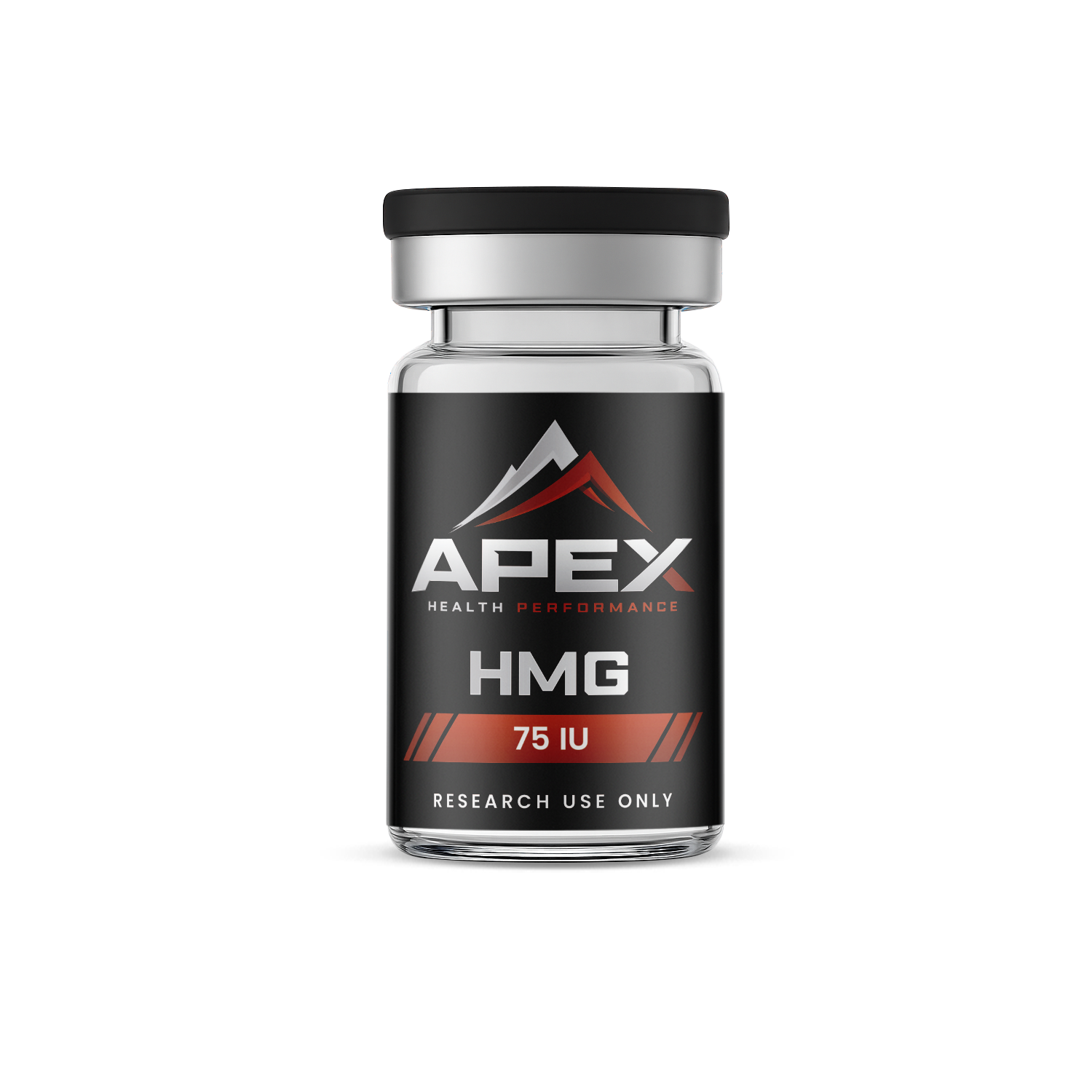
HMG (75iu)
$130.00
1 published certificate
Certificate information is temporarily unavailable.
Additional information
| Weight | 0.0625 lbs |
|---|
Published Scientific Research
Explore the full library of peer-reviewed studies, clinical data, mechanism breakdowns, and molecular specifications for HMG (75iu).
All research is sourced from PubMed-indexed journals for informational and educational purposes only. For Research Use Only (RUO). Not for human use.
View Full Research Library →Storage Instructions
All products from Apex Health Performance are manufactured using a lyophilization (freeze-drying) process. This method is designed to maintain product integrity and allows vials to remain stable during shipping for approximately 3–4 months.
Once a vial is reconstituted with bacteriostatic water, it should be stored in the refrigerator to help maintain stability. Under these conditions, reconstituted material is generally considered stable for up to 30 days.
Lyophilization is a dehydration technique in which compounds are frozen and then exposed to low pressure. This causes the water in the vial to sublimate directly from solid to gas, leaving behind a stable, crystalline white structure. This powder can be kept at room temperature until reconstitution.
Upon receipt, products should be stored away from heat and light. For short-term use, refrigeration at approximately 4°C (39°F) is suitable. For long-term storage (several months to years), vials may be placed in a freezer at approximately -80°C (-112°F). Freezing is the preferred method for preserving product stability over extended periods.
⚠️ Important Notice:
These products are intended for research use only. Not for human consumption.
Related products
-
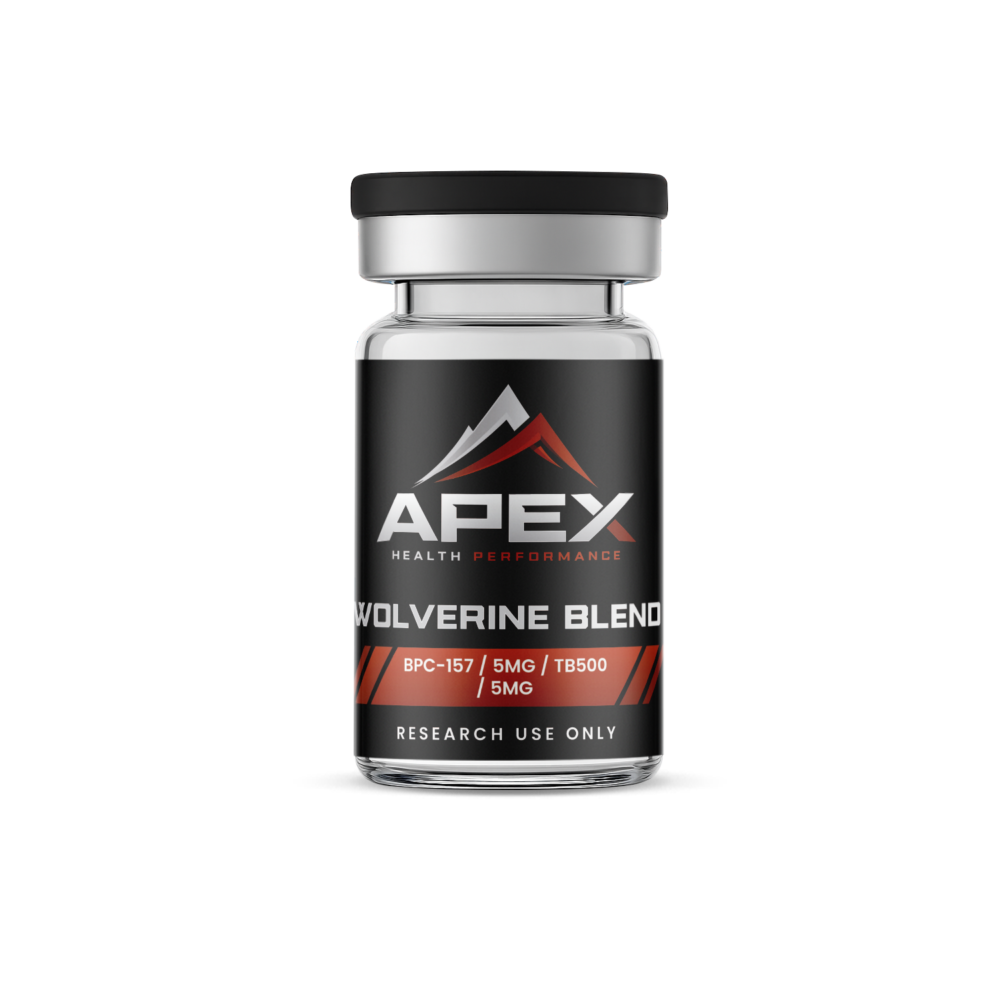
Wolverine Blend – BPC-157 (5mg) / TB500 (5mg) (Globally Sourced)
Price range: $120.00 through $200.00Select options This product has multiple variants. The options may be chosen on the product page -
-
Research Use Only
The following peer-reviewed publications reference compounds for laboratory and in vitro research purposes only. Not for human or animal use. Not intended to diagnose, treat, cure, or prevent any disease or condition.
Published Scientific Research
Peer-reviewed laboratory studies investigating research peptides
Dual functions of Insig proteins in cholesterol homeostasis.
The molecular mechanism of how cells maintain cholesterol homeostasis has become clearer for the understanding of complicated association between sterol regulatory element-binding proteins (SREBPs), SREBP cleavage-activating protein (SCAP), 3-hydroxy-3-methylglutaryl coenzyme A reductase (HMG-CoA reductase) and Insuin induced-genes (Insigs).
View Full Study on PubMedHMG-CoA reductase inhibitor regulates endothelial progenitor function through the phosphatidylinositol 3'-kinase/AKT signal transduction pathway.
We examined the effect and mechanism of simvastatin on peripheral endothelial progenitor cells (EPCs). Western blots analysis showed that simvastatin increased the phosphorylation of eNOS and FKHRL1, which can be blocked by the PI3K/AKT pathway blocker LY294002 .
View Full Study on PubMedEmerging amyloid beta (Ab) peptide modulators for the treatment of Alzheimer's disease (AD).
RESULTS/CONCLUSION: Considerable research effort has focused on secretase-mediated mechanisms of betaAPP processing, and the latest pharmacological strategies have used selective Abeta-peptide-lowering agents (SALA) to provide therapeutic benefit against Abeta-initiated neurodegenerative pathology. One unexpected benefit of statins (HMG-CoA inhibitors), besides their cholesterol lowering abilities, has been their ancillary effects in potentiating the enzymatic mechanisms that generate Abeta-peptides.
View Full Study on PubMedSox17 influences the differentiation of respiratory epithelial cells.
In vitro, Sox17 inhibited Sftpc and enhanced Foxj1 promoter activity, consistent with its expression in proximal airway cells. Conditional expression of Sox17 in peripheral respiratory epithelial cells of adult lung induced hyperplastic clusters of cells expressing increased levels of beta-catenin and differentiation markers representing multiple proximal respiratory epithelial cell types.
View Full Study on PubMedBinding site for fungal beta-lactone hymeglusin on cytosolic 3-hydroxy-3-methylglutaryl coenzyme A synthase.
We studied the molecular mechanism through which the fungal beta-lactone, hymeglusin, potently and specifically inhibits 3-hydroxy-3-methylglutaryl-CoA (HMG-CoA) synthase. These findings showed that hymeglusin inhibits hamster cytosolic HMG-CoA synthase by covalently modifying the active Cys 129 residue of the enzyme.
View Full Study on PubMedTranscriptome profiling and the pathogenesis of diabetic complications.
The cellular mediators of high glucose-induced injury include activation of protein kinase C, accumulation of cell sorbitol from increased flux through the aldose reductase pathway, and generation of advanced glycosylation end products and reactive oxygen species, among others.
View Full Study on PubMedResearch Use Only
The following peer-reviewed publications reference compounds for laboratory and in vitro research purposes only. Not for human or animal use. Not intended to diagnose, treat, cure, or prevent any disease or condition.
Published Scientific Research
Peer-reviewed laboratory studies investigating research peptides
Dual functions of Insig proteins in cholesterol homeostasis.
The molecular mechanism of how cells maintain cholesterol homeostasis has become clearer for the understanding of complicated association between sterol regulatory element-binding proteins (SREBPs), SREBP cleavage-activating protein (SCAP), 3-hydroxy-3-methylglutaryl coenzyme A reductase (HMG-CoA reductase) and Insuin induced-genes (Insigs).
View Full Study on PubMedHMG-CoA reductase inhibitor regulates endothelial progenitor function through the phosphatidylinositol 3'-kinase/AKT signal transduction pathway.
We examined the effect and mechanism of simvastatin on peripheral endothelial progenitor cells (EPCs). Western blots analysis showed that simvastatin increased the phosphorylation of eNOS and FKHRL1, which can be blocked by the PI3K/AKT pathway blocker LY294002 .
View Full Study on PubMedEmerging amyloid beta (Ab) peptide modulators for the treatment of Alzheimer's disease (AD).
RESULTS/CONCLUSION: Considerable research effort has focused on secretase-mediated mechanisms of betaAPP processing, and the latest pharmacological strategies have used selective Abeta-peptide-lowering agents (SALA) to provide therapeutic benefit against Abeta-initiated neurodegenerative pathology. One unexpected benefit of statins (HMG-CoA inhibitors), besides their cholesterol lowering abilities, has been their ancillary effects in potentiating the enzymatic mechanisms that generate Abeta-peptides.
View Full Study on PubMedSox17 influences the differentiation of respiratory epithelial cells.
In vitro, Sox17 inhibited Sftpc and enhanced Foxj1 promoter activity, consistent with its expression in proximal airway cells. Conditional expression of Sox17 in peripheral respiratory epithelial cells of adult lung induced hyperplastic clusters of cells expressing increased levels of beta-catenin and differentiation markers representing multiple proximal respiratory epithelial cell types.
View Full Study on PubMedBinding site for fungal beta-lactone hymeglusin on cytosolic 3-hydroxy-3-methylglutaryl coenzyme A synthase.
We studied the molecular mechanism through which the fungal beta-lactone, hymeglusin, potently and specifically inhibits 3-hydroxy-3-methylglutaryl-CoA (HMG-CoA) synthase. These findings showed that hymeglusin inhibits hamster cytosolic HMG-CoA synthase by covalently modifying the active Cys 129 residue of the enzyme.
View Full Study on PubMedTranscriptome profiling and the pathogenesis of diabetic complications.
The cellular mediators of high glucose-induced injury include activation of protein kinase C, accumulation of cell sorbitol from increased flux through the aldose reductase pathway, and generation of advanced glycosylation end products and reactive oxygen species, among others.
View Full Study on PubMedResearch Use Only
The following peer-reviewed publications reference compounds for laboratory and in vitro research purposes only. Not for human or animal use. Not intended to diagnose, treat, cure, or prevent any disease or condition.
Published Scientific Research
Peer-reviewed laboratory studies investigating research peptides
Dual functions of Insig proteins in cholesterol homeostasis.
The molecular mechanism of how cells maintain cholesterol homeostasis has become clearer for the understanding of complicated association between sterol regulatory element-binding proteins (SREBPs), SREBP cleavage-activating protein (SCAP), 3-hydroxy-3-methylglutaryl coenzyme A reductase (HMG-CoA reductase) and Insuin induced-genes (Insigs).
View Full Study on PubMed →HMG-CoA reductase inhibitor regulates endothelial progenitor function through the phosphatidylinositol 3'-kinase/AKT signal transduction pathway.
We examined the effect and mechanism of simvastatin on peripheral endothelial progenitor cells (EPCs). Western blots analysis showed that simvastatin increased the phosphorylation of eNOS and FKHRL1, which can be blocked by the PI3K/AKT pathway blocker LY294002 .
View Full Study on PubMed →Emerging amyloid beta (Ab) peptide modulators for the treatment of Alzheimer's disease (AD).
RESULTS/CONCLUSION: Considerable research effort has focused on secretase-mediated mechanisms of betaAPP processing, and the latest pharmacological strategies have used selective Abeta-peptide-lowering agents (SALA) to provide therapeutic benefit against Abeta-initiated neurodegenerative pathology. One unexpected benefit of statins (HMG-CoA inhibitors), besides their cholesterol lowering abilities, has been their ancillary effects in potentiating the enzymatic mechanisms that generate Abeta-peptides.
View Full Study on PubMed →Sox17 influences the differentiation of respiratory epithelial cells.
In vitro, Sox17 inhibited Sftpc and enhanced Foxj1 promoter activity, consistent with its expression in proximal airway cells. Conditional expression of Sox17 in peripheral respiratory epithelial cells of adult lung induced hyperplastic clusters of cells expressing increased levels of beta-catenin and differentiation markers representing multiple proximal respiratory epithelial cell types.
View Full Study on PubMed →Binding site for fungal beta-lactone hymeglusin on cytosolic 3-hydroxy-3-methylglutaryl coenzyme A synthase.
We studied the molecular mechanism through which the fungal beta-lactone, hymeglusin, potently and specifically inhibits 3-hydroxy-3-methylglutaryl-CoA (HMG-CoA) synthase. These findings showed that hymeglusin inhibits hamster cytosolic HMG-CoA synthase by covalently modifying the active Cys 129 residue of the enzyme.
View Full Study on PubMed →Transcriptome profiling and the pathogenesis of diabetic complications.
The cellular mediators of high glucose-induced injury include activation of protein kinase C, accumulation of cell sorbitol from increased flux through the aldose reductase pathway, and generation of advanced glycosylation end products and reactive oxygen species, among others.
View Full Study on PubMed →Important Research Notice: These products are research chemicals intended exclusively for in vitro laboratory research by qualified professionals. Not for human or animal consumption. Not approved by the FDA for any therapeutic purpose. Sold strictly for scientific research applications only.