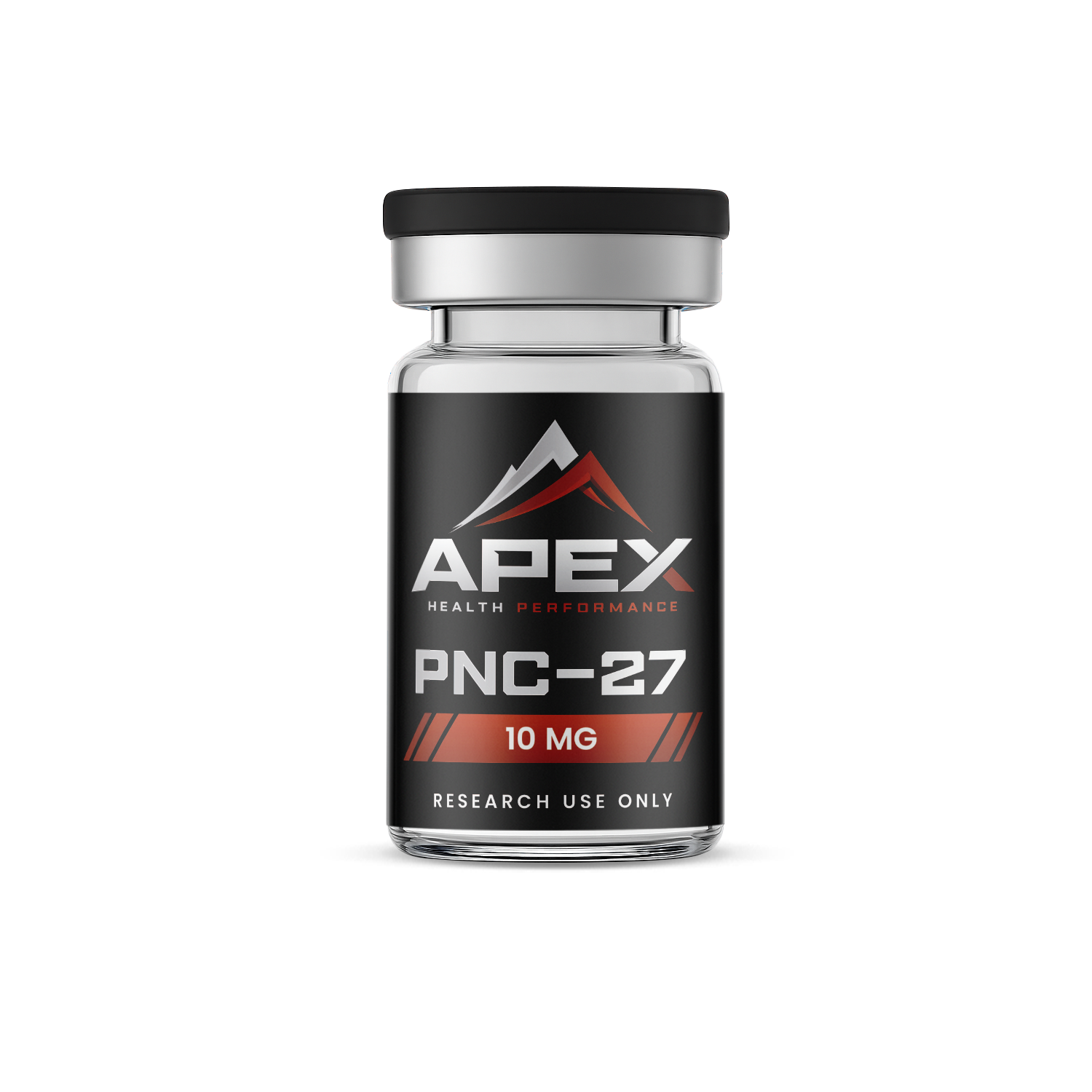
PNC-27 (10mg)
$220.00
1 published certificate
Certificate information is temporarily unavailable.
Description
A single-component research material supplied for controlled research environments. PNC 27 (10 mg) is a synthetic peptide used in research exploring p53-related signaling, cell membrane interactions, and peptide-mediated cell targeting mechanisms in preclinical model systems.Not for human use.
Documentation & Quality Assurance
Each lot is sourced through our verified global supply chain with emphasis on traceability and quality control.These documents are reviewed internally and displayed as they become available.
Important Notice
This product is intended for laboratory research use only. It is not intended for human or veterinary use, and must not be used for diagnostic, therapeutic, or clinical purposes.
This material is not a drug, medical device, or dietary supplement, and has not been evaluated by the U.S. Food and Drug Administration.
Quality & Manufacturing
We work directly with the manufacturers. Each supplier is reviewed for reliability, documentation integrity, and transparency in testing.
Our minimum purity standard is 98%. Every batch we ship has its own certificate of analysis, and every certificate confirms identity, purity and net content. Where available, endotoxin testing results are included on Certificates of Analysis to verify laboratory purity; their inclusion is for research quality assessment only and does not imply suitability for human or veterinary use.
All research materials are sealed for integrity and packaged for stability during storage and transport from manufacturing through final delivery.
Additional information
| Weight | 0.0625 lbs |
|---|
Certificate of Analysis
Every batch undergoes independent third-party laboratory analysis to verify identity, potency, and safety. Testing includes quantitative assay verification, heavy metals screening, and comprehensive microbial analysis.
View Certificate of AnalysisStorage Instructions
All products from Apex Health Performance are manufactured using a lyophilization (freeze-drying) process. This method is designed to maintain product integrity and allows vials to remain stable during shipping for approximately 3–4 months.
Once a vial is reconstituted with bacteriostatic water, it should be stored in the refrigerator to help maintain stability. Under these conditions, reconstituted material is generally considered stable for up to 30 days.
Lyophilization is a dehydration technique in which compounds are frozen and then exposed to low pressure. This causes the water in the vial to sublimate directly from solid to gas, leaving behind a stable, crystalline white structure. This powder can be kept at room temperature until reconstitution.
Upon receipt, products should be stored away from heat and light. For short-term use, refrigeration at approximately 4°C (39°F) is suitable. For long-term storage (several months to years), vials may be placed in a freezer at approximately -80°C (-112°F). Freezing is the preferred method for preserving product stability over extended periods.
⚠️ Important Notice:
These products are intended for research use only. Not for human consumption.
Related products
-
-
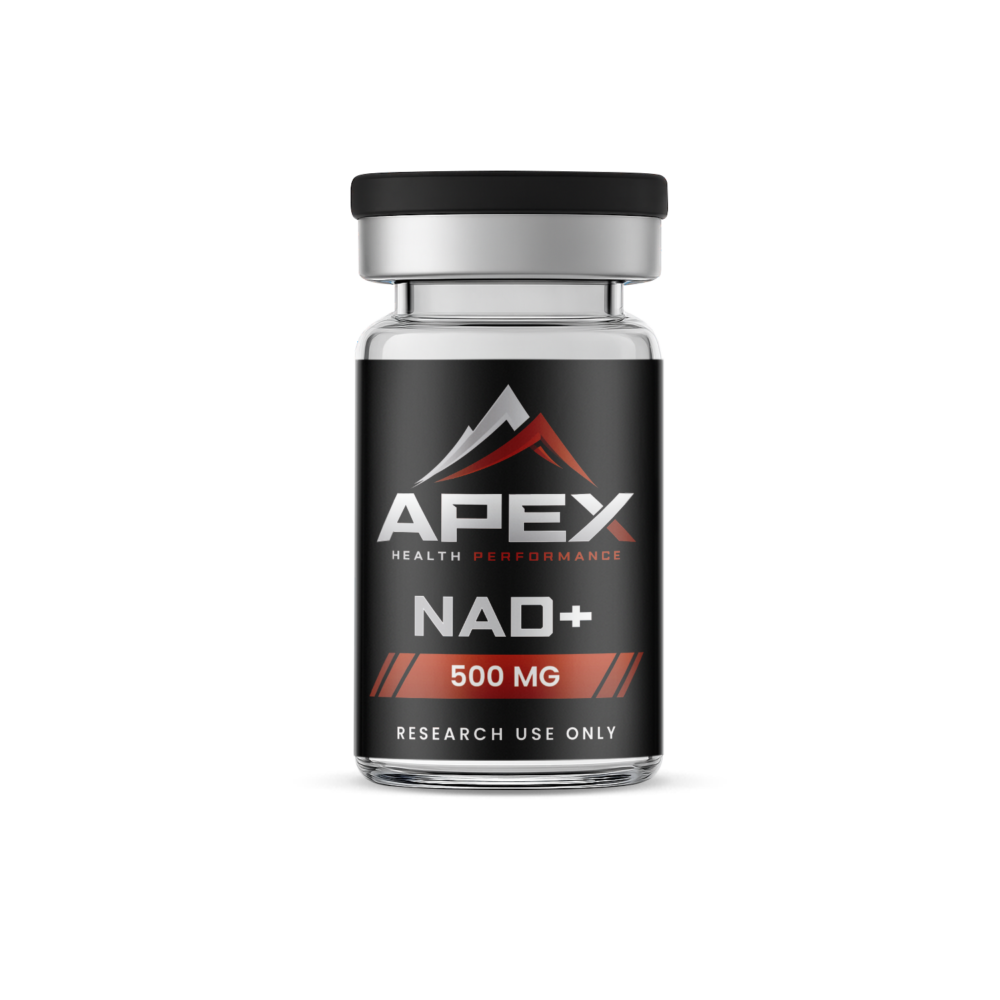
NAD+
Price range: $100.00 through $180.00Select options This product has multiple variants. The options may be chosen on the product page -
Research Use Only
The following peer-reviewed publications reference compounds for laboratory and in vitro research purposes only. Not for human or animal use. Not intended to diagnose, treat, cure, or prevent any disease or condition.
Published Scientific Research
Peer-reviewed laboratory studies investigating immunomodulatory peptides
Targeting EFHD2 inhibits interferon-γ signaling and ameliorates non-alcoholic steatohepatitis.
BACKGROUND & AIMS: The precise pathomechanisms underlying the development of non-alcoholic steatohepatitis (NASH, also known as metabolic dysfunction-associated steatohepatitis [MASH]) remain incompletely understood. Molecular mechanisms underlying EFHD2 function were investigated, while chemical and genetic investigations were performed to assess its potential as a therapeutic target.
View Full Study on PubMedThe role of ETFS amino acids on the stability and inhibition of p53-MDM2 complex of anticancer p53-derivatives peptides: Density functional theory and molecular docking studies.
Knowledge of the molecular mechanisms involved in tumor processes allows the identification of a greater number of therapeutic targets employed in the study of new anticancer drugs. Therefore, DFT and molecular docking studies showed that the proposed peptides: PNC-28B, PNC-27B and PNC-28A could inhibit the binding of MDM2 to the p53 protein, decreasing the translocation and degradation of p53 native protein.
View Full Study on PubMedConjugated PNC-27 peptide/PEI-superparamagnetic iron oxide nanoparticles (SPIONs) as a double targeting agent for early cancer diagnosis: study.
However, the results were indicative of the more toxic impacts of targeted synthesized NPs against CT-26 cancer cell line when being compared with HT-29 cells, which may be caused by the different cytotoxicity mechanisms of NPs.
View Full Study on PubMedMolecular Targeting of H/MDM-2 Oncoprotein in Human Colon Cancer Cells and Stem-like Colonic Epithelial-derived Progenitor Cells.
MTT, LDH release, annexin V binding and caspase 3 assays were used to assess PNC-27-induced cell death.
View Full Study on PubMedToward the Discovery of Host-Defense Peptides in Plants.
Defense peptides protect multicellular eukaryotes from infections. In biomedical sciences, a dominant conceptual framework refers to defense peptides as host-defense peptides (HDPs), which are bifunctional peptides with both direct antimicrobial and immunomodulatory activities. No HDP has been reported in plants so far, and the very concept of HDP has not been captured yet by the plant science community. Plant science thus lacks the conceptual framework that would coordinate research efforts aim
View Full Study on PubMedThe "C3aR Antagonist" SB290157 is a Partial C5aR2 Agonist.
C3a activates C3aR, while C5a activates two receptors (C5aR1 and C5aR2) to exert their immunomodulatory activities. Given these issues, in the present study we aimed to further explore SB290157's pharmacological selectivity by screening the drug against three human anaphylatoxin receptors, C3aR, C5aR1 and C5aR2, using cell models.
View Full Study on PubMedResearch Use Only
The following peer-reviewed publications reference compounds for laboratory and in vitro research purposes only. Not for human or animal use. Not intended to diagnose, treat, cure, or prevent any disease or condition.
Published Scientific Research
Peer-reviewed laboratory studies investigating immunomodulatory peptides
The role of ETFS amino acids on the stability and inhibition of p53-MDM2 complex of anticancer p53-derivatives peptides: Density functional theory and molecular docking studies.
Knowledge of the molecular mechanisms involved in tumor processes allows the identification of a greater number of therapeutic targets employed in the study of new anticancer drugs. Therefore, DFT and molecular docking studies showed that the proposed peptides: PNC-28B, PNC-27B and PNC-28A could inhibit the binding of MDM2 to the p53 protein, decreasing the translocation and degradation of p53 native protein.
View Full Study on PubMedConjugated PNC-27 peptide/PEI-superparamagnetic iron oxide nanoparticles (SPIONs) as a double targeting agent for early cancer diagnosis: study.
However, the results were indicative of the more toxic impacts of targeted synthesized NPs against CT-26 cancer cell line when being compared with HT-29 cells, which may be caused by the different cytotoxicity mechanisms of NPs.
View Full Study on PubMedMolecular Targeting of H/MDM-2 Oncoprotein in Human Colon Cancer Cells and Stem-like Colonic Epithelial-derived Progenitor Cells.
MTT, LDH release, annexin V binding and caspase 3 assays were used to assess PNC-27-induced cell death.
View Full Study on PubMedSynergy between Paclitaxel and Anti-Cancer Peptide PNC-27 in the Treatment of Ovarian Cancer.
ID8 cells surviving paclitaxel demonstrated increased expression of MDM-2 and increased susceptibility to PNC-27.
View Full Study on PubMedEx vivo Efficacy of Anti-Cancer Drug PNC-27 in the Treatment of Patient-Derived Epithelial Ovarian Cancer.
OBJECTIVE: Despite an 80% response rate to chemotherapy, epithelial ovarian cancer has the highest case fatality rate of all gynecologic malignancies. Several studies have shown the efficiency of anticancer peptides PNC-27 and PNC-28 in killing a variety of cancer cells selectively in vitro and in vivo. The purpose of this study was to evaluate the efficacy of PNC-27 against human primary epithelial ovarian cancer. METHODS: We established primary cultures of freshly isolated epithelial ovarian c
View Full Study on PubMedDesign and implementation of a high yield production system for recombinant expression of peptides.
A non common but interesting research area is related to peptides with intracellular targets, which opens up new possibilities, allowing the modulation of processes occurring within the cell or interference with signaling pathways.
View Full Study on PubMedResearch Use Only
The following peer-reviewed publications reference compounds for laboratory and in vitro research purposes only. Not for human or animal use. Not intended to diagnose, treat, cure, or prevent any disease or condition.
Published Scientific Research
Peer-reviewed laboratory studies investigating immunomodulatory peptides
Targeting EFHD2 inhibits interferon-γ signaling and ameliorates non-alcoholic steatohepatitis.
BACKGROUND & AIMS: The precise pathomechanisms underlying the development of non-alcoholic steatohepatitis (NASH, also known as metabolic dysfunction-associated steatohepatitis [MASH]) remain incompletely understood. Molecular mechanisms underlying EFHD2 function were investigated, while chemical and genetic investigations were performed to assess its potential as a therapeutic target.
View Full Study on PubMed →The role of ETFS amino acids on the stability and inhibition of p53-MDM2 complex of anticancer p53-derivatives peptides: Density functional theory and molecular docking studies.
Knowledge of the molecular mechanisms involved in tumor processes allows the identification of a greater number of therapeutic targets employed in the study of new anticancer drugs. Therefore, DFT and molecular docking studies showed that the proposed peptides: PNC-28B, PNC-27B and PNC-28A could inhibit the binding of MDM2 to the p53 protein, decreasing the translocation and degradation of p53 native protein.
View Full Study on PubMed →Conjugated PNC-27 peptide/PEI-superparamagnetic iron oxide nanoparticles (SPIONs) as a double targeting agent for early cancer diagnosis: study.
However, the results were indicative of the more toxic impacts of targeted synthesized NPs against CT-26 cancer cell line when being compared with HT-29 cells, which may be caused by the different cytotoxicity mechanisms of NPs.
View Full Study on PubMed →Molecular Targeting of H/MDM-2 Oncoprotein in Human Colon Cancer Cells and Stem-like Colonic Epithelial-derived Progenitor Cells.
MTT, LDH release, annexin V binding and caspase 3 assays were used to assess PNC-27-induced cell death.
View Full Study on PubMed →Toward the Discovery of Host-Defense Peptides in Plants.
Defense peptides protect multicellular eukaryotes from infections. In biomedical sciences, a dominant conceptual framework refers to defense peptides as host-defense peptides (HDPs), which are bifunctional peptides with both direct antimicrobial and immunomodulatory activities. No HDP has been reported in plants so far, and the very concept of HDP has not been captured yet by the plant science community. Plant science thus lacks the conceptual framework that would coordinate research efforts aim
View Full Study on PubMed →The "C3aR Antagonist" SB290157 is a Partial C5aR2 Agonist.
C3a activates C3aR, while C5a activates two receptors (C5aR1 and C5aR2) to exert their immunomodulatory activities. Given these issues, in the present study we aimed to further explore SB290157's pharmacological selectivity by screening the drug against three human anaphylatoxin receptors, C3aR, C5aR1 and C5aR2, using cell models.
View Full Study on PubMed →Important Research Notice: These products are research chemicals intended exclusively for in vitro laboratory research by qualified professionals. Not for human or animal consumption. Not approved by the FDA for any therapeutic purpose. Sold strictly for scientific research applications only.